The Practical Sustainability Course
(PSC)
Immerse yourself in an in-depth, embodied and dynamic learning experience.
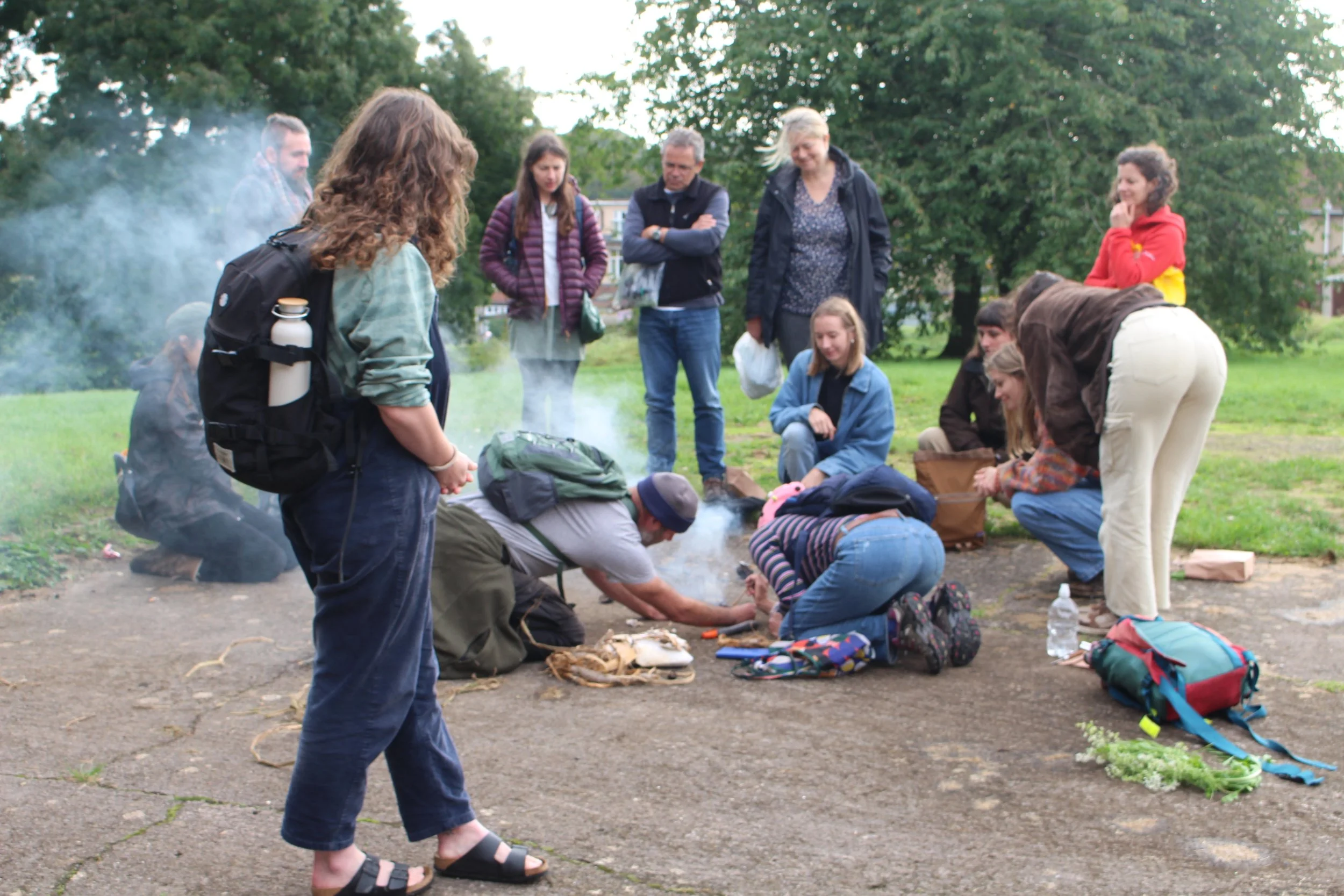
The year is packed with information, challenging questions, innovative solutions, bold ideas and collaborative experiences. The curriculum is taught through hands-on workshops and activities, field trips, design projects, discussions and group work, by tutors actively engaged with their subject.
The Practical Sustainability Course is often compared to a Foundation-Year course as it delivers a holistic and wide-ranging educational experience. The course centres on the education in effective sustainability practices for meeting our own, and our community’s needs, based in the context of real life parameters; that are also regenerative and joyful.

Quick Links
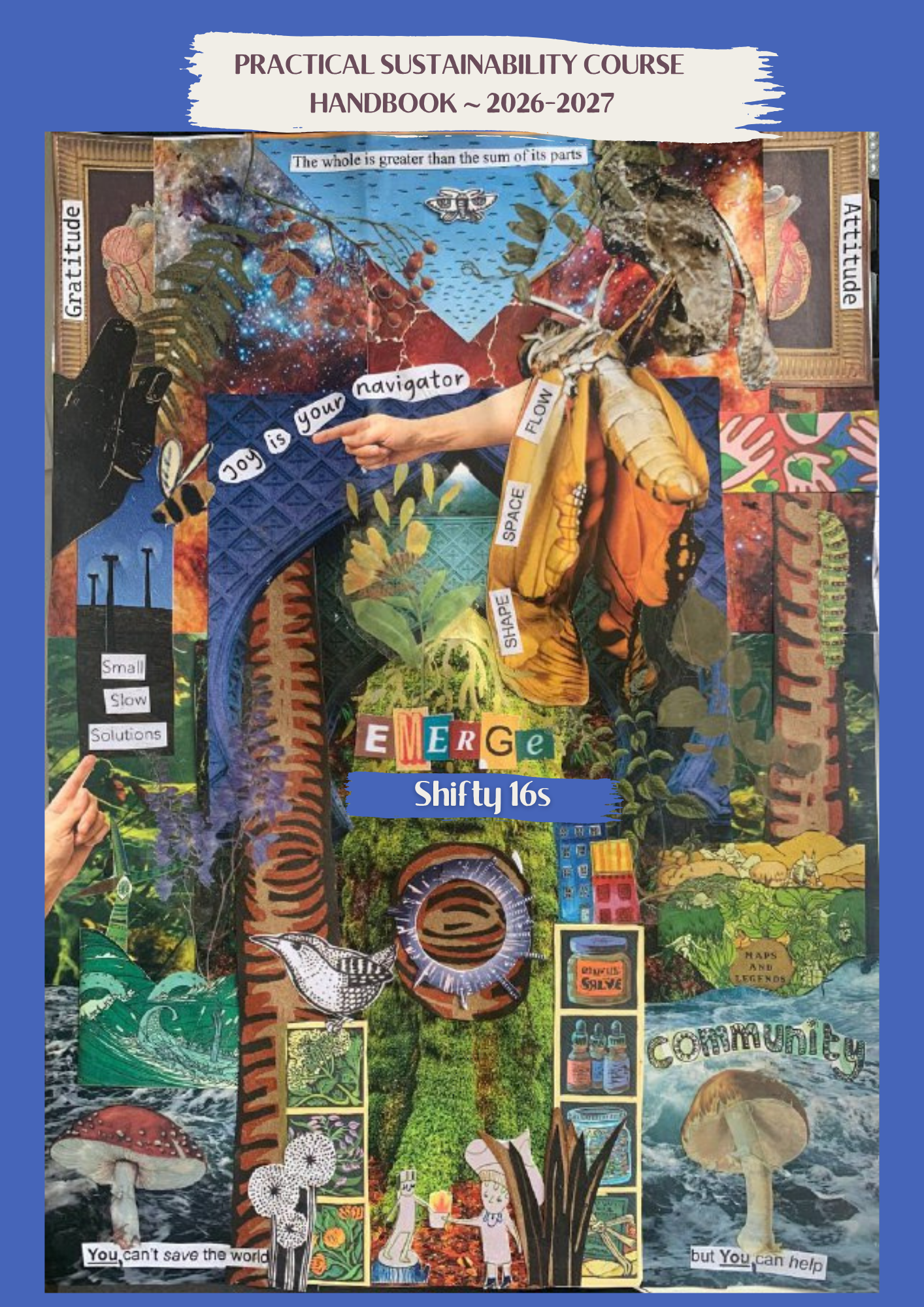
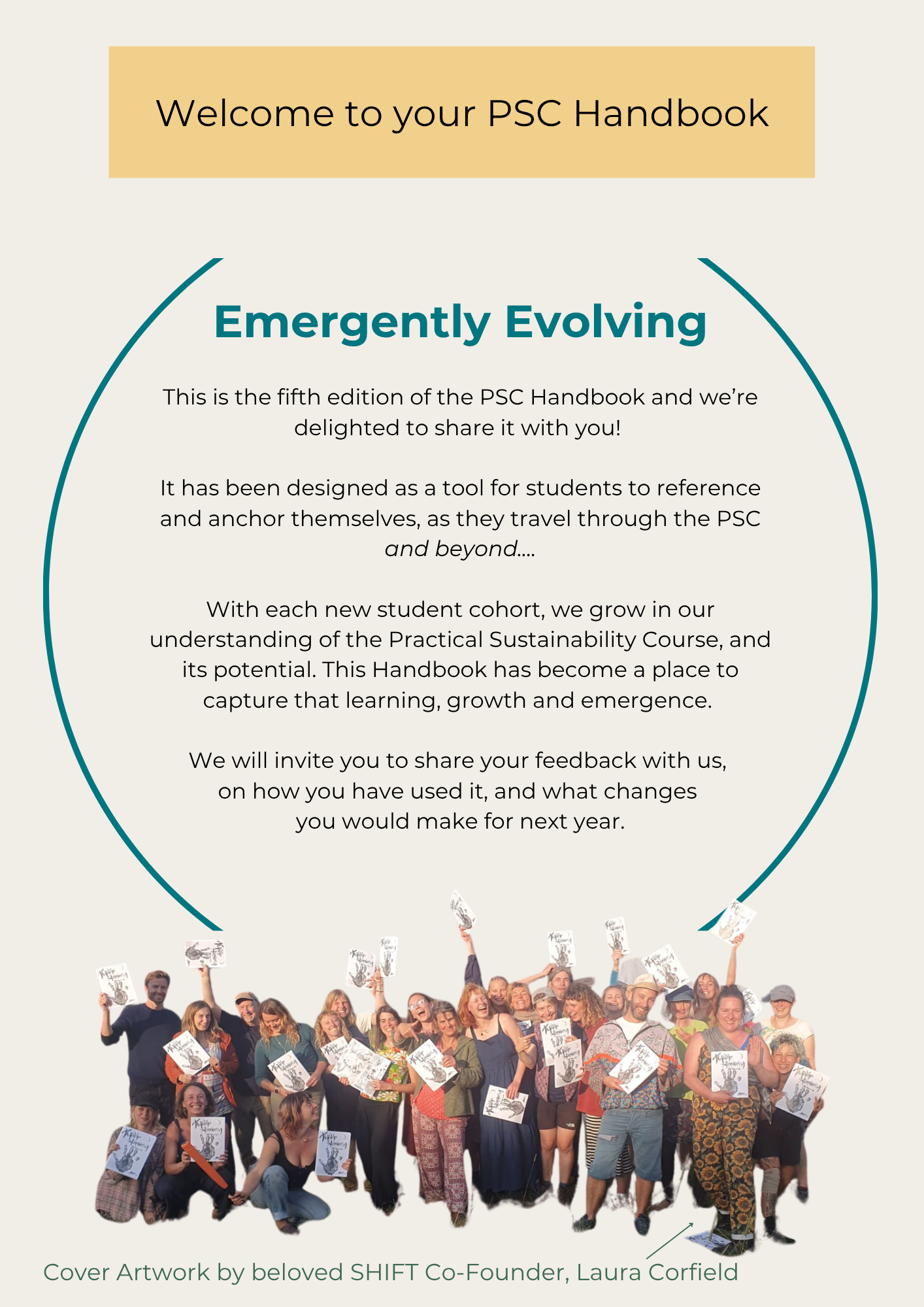
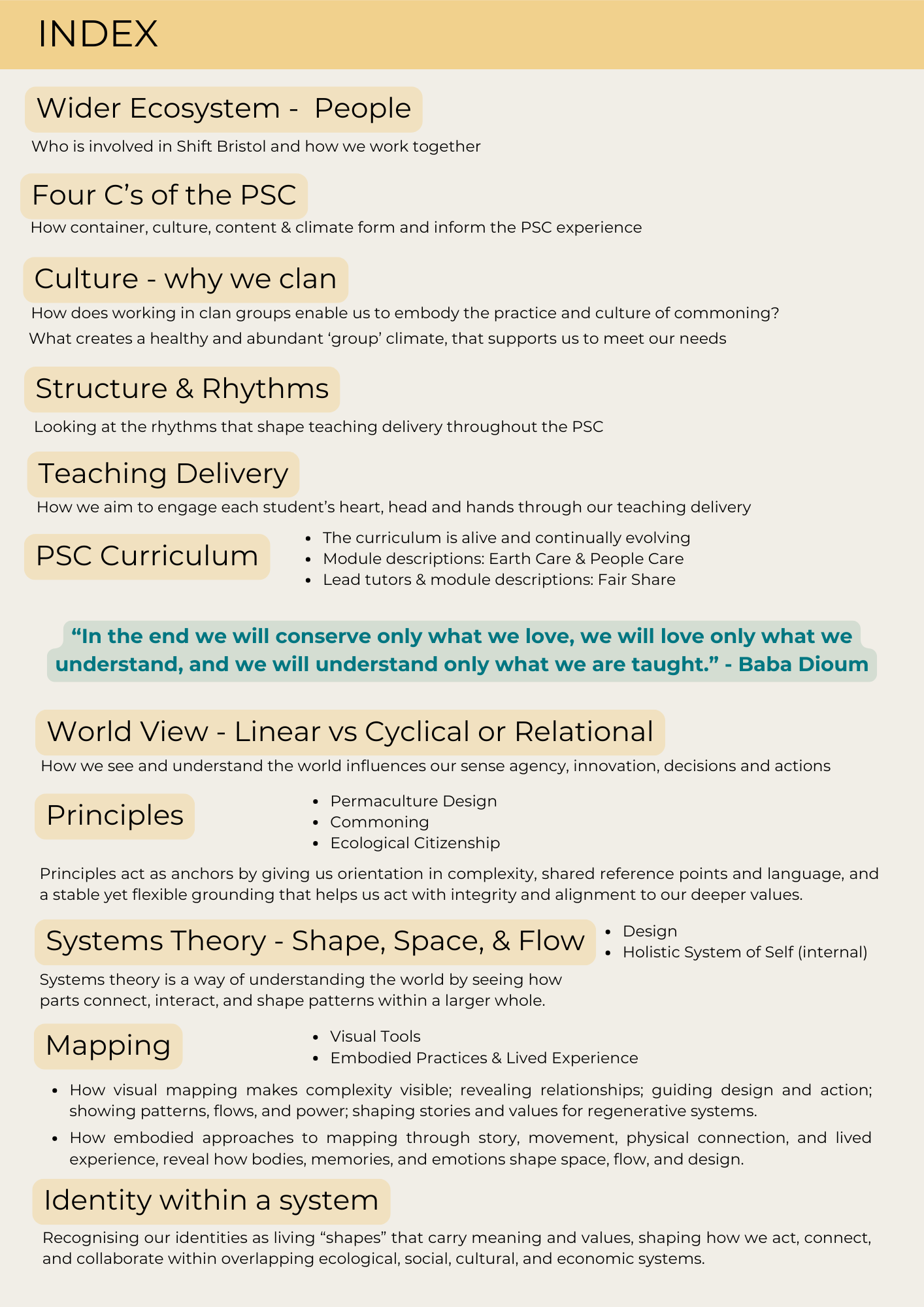
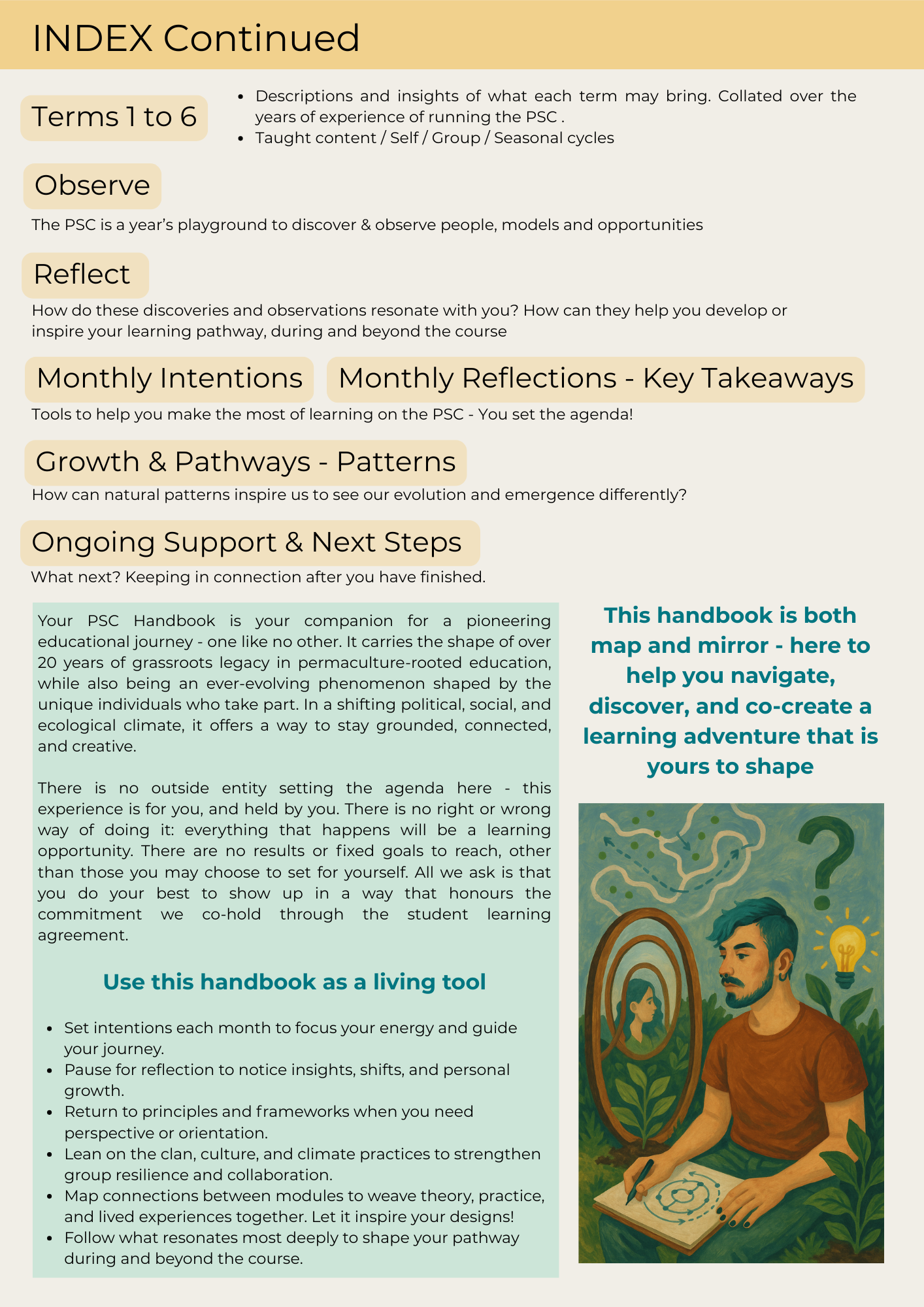
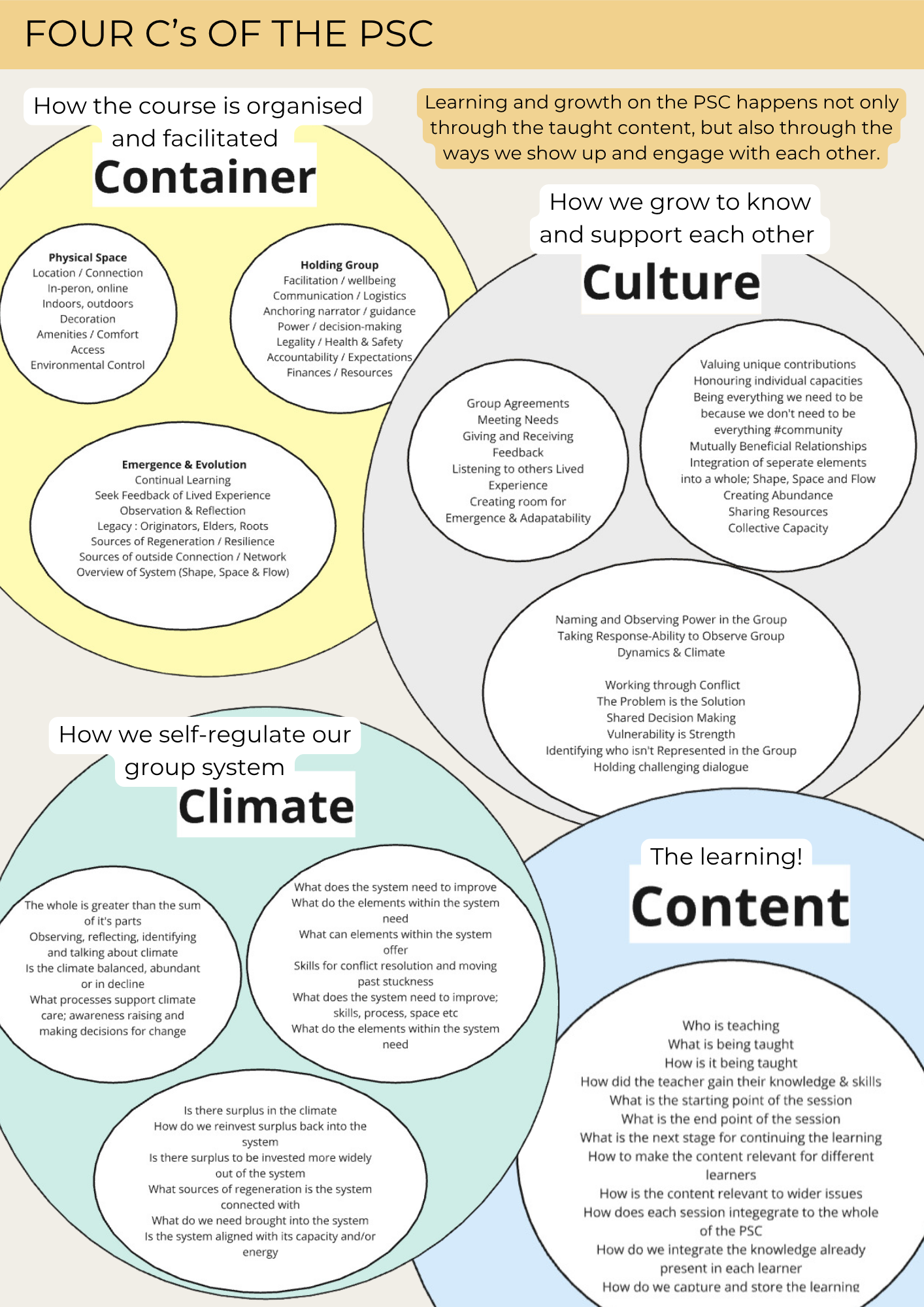
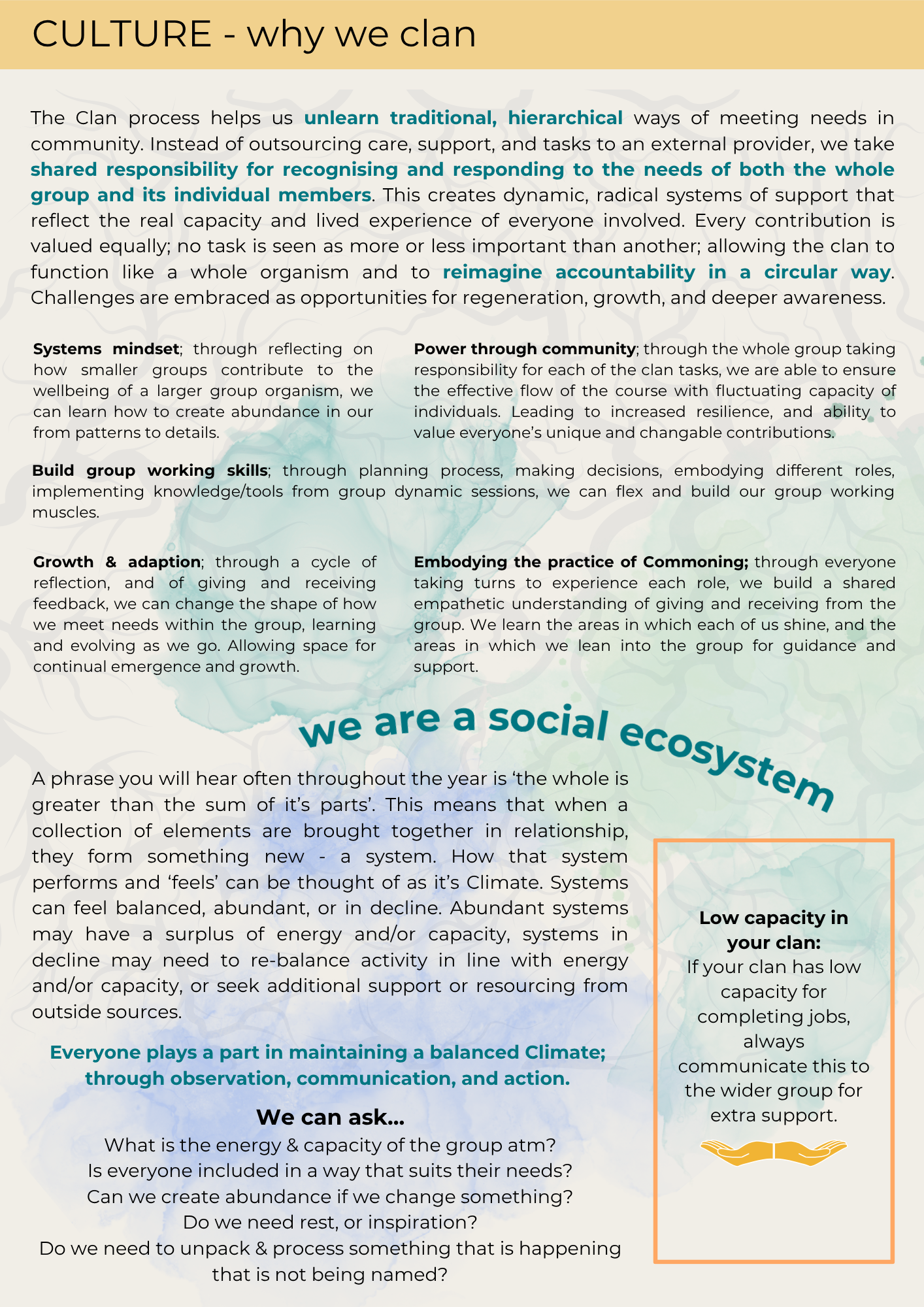
See the PSC Student Handbook below for more insight into the course content, culture and container.
Key Information
-
Course places are filled on a first come, first served basis.
There are 30 places available.
Concessionary places are limited (see here for details).
-
Complete the application form
Receive an invite to an interview
Attend 1:1 interview
Receive a full place offer
Pay deposit
Receive welcome pack
-
The course dates match Bristol school term times.
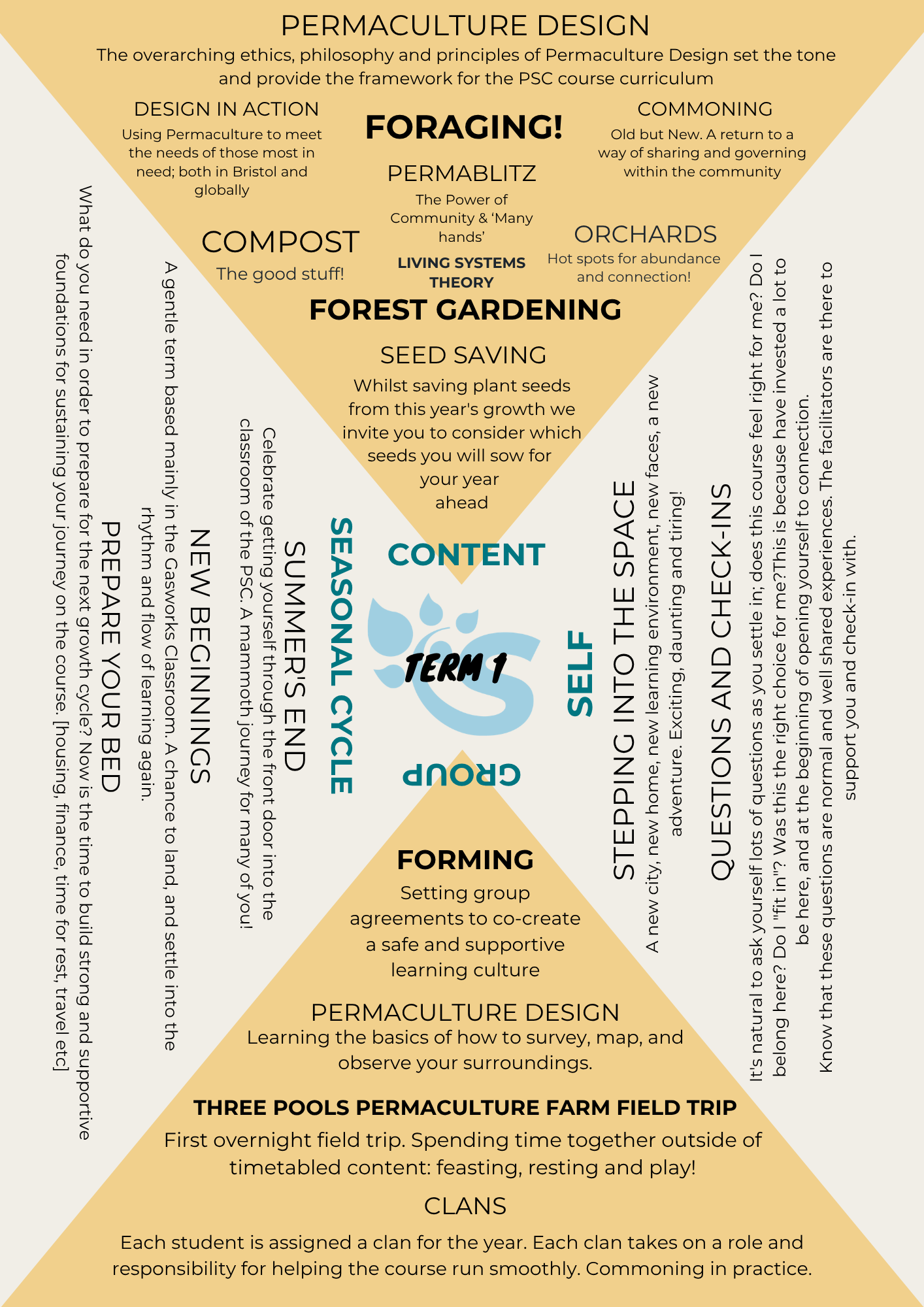
Term 1: 1st September – 22nd October, 2026
Term 2: 3rd November – 17th December, 2026
Term 3: 5th January – 11th February, 2027
Term 4: 23rd February – 25th March, 2027
Term 5: 13th April – 27th May, 2027
Term 6: June 8 – 22nd July, 2027
-
The PSC takes place 3 days per week, Tuesday, Wednesday, Thursday, according to the term dates as listed above.
Approximate study hours: 9.30am to 3.30pm.
Timings do not include travel/commuting time to field trips or site visits.
Some course days are longer, depending on the activity - students are informed in advance. Such as roundhouse build days during July, which finish at 5.30pm.
Most terms include an overnight field trip (1-2 nights).
It is a requirement that students commit to regular and ongoing attendance throughout the year.
-
Course fees cover all tuition, practical materials and field trip accommodation.
Full fee : £4,350
Supporter Fee: Up to £8,000
Part-Concession Fee : £3,795
Full Concession Fee : £3,195
We offer a range of limited concessionary places which you apply for when filling out your application form.
Visit here to read about Concessionary Places and our Tiered Payment Scheme
-
When you have been offered a place on the course you will be required to pay a non-refundable deposit to confirm your place.

Practical Sustainability Course Aims :
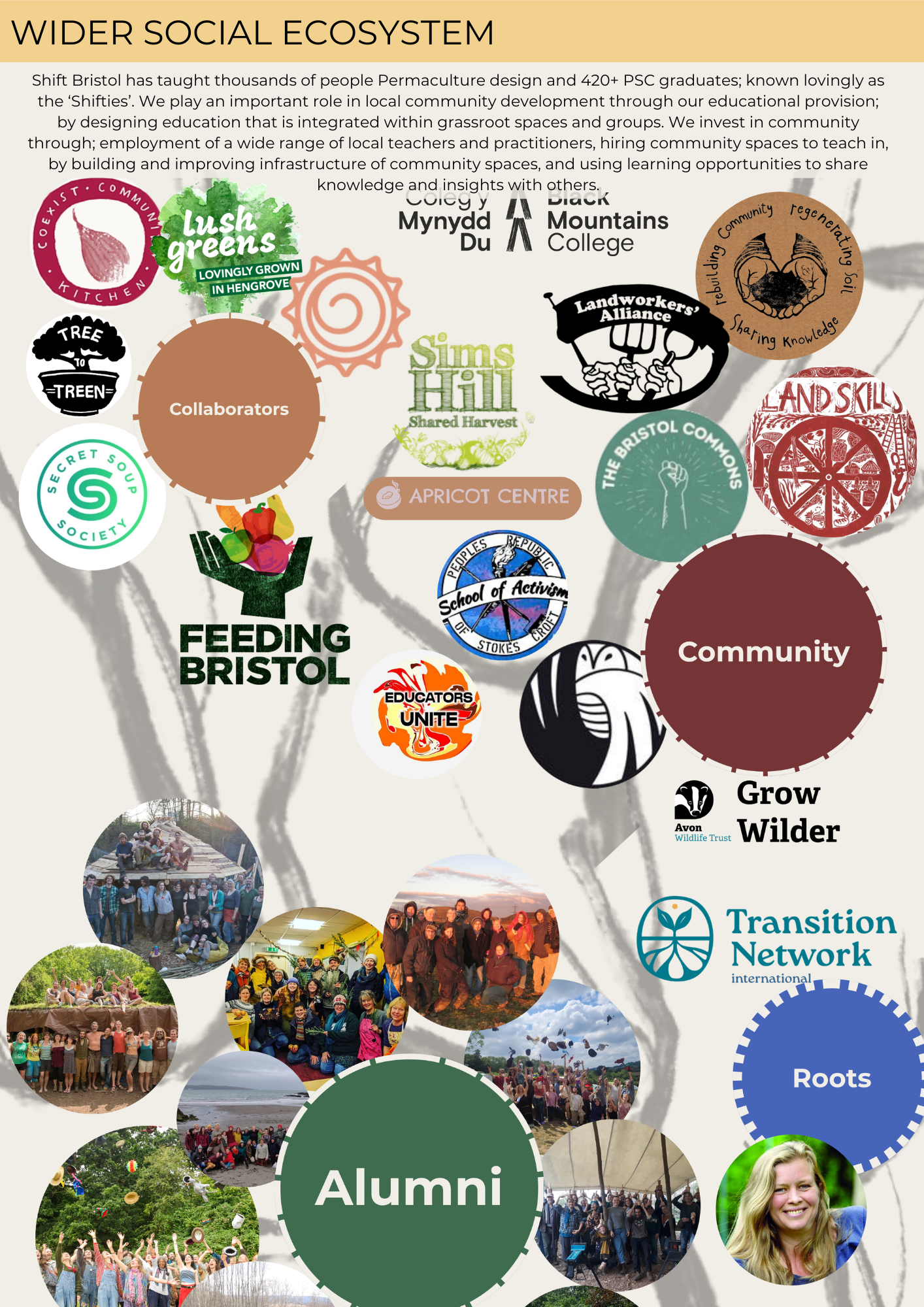
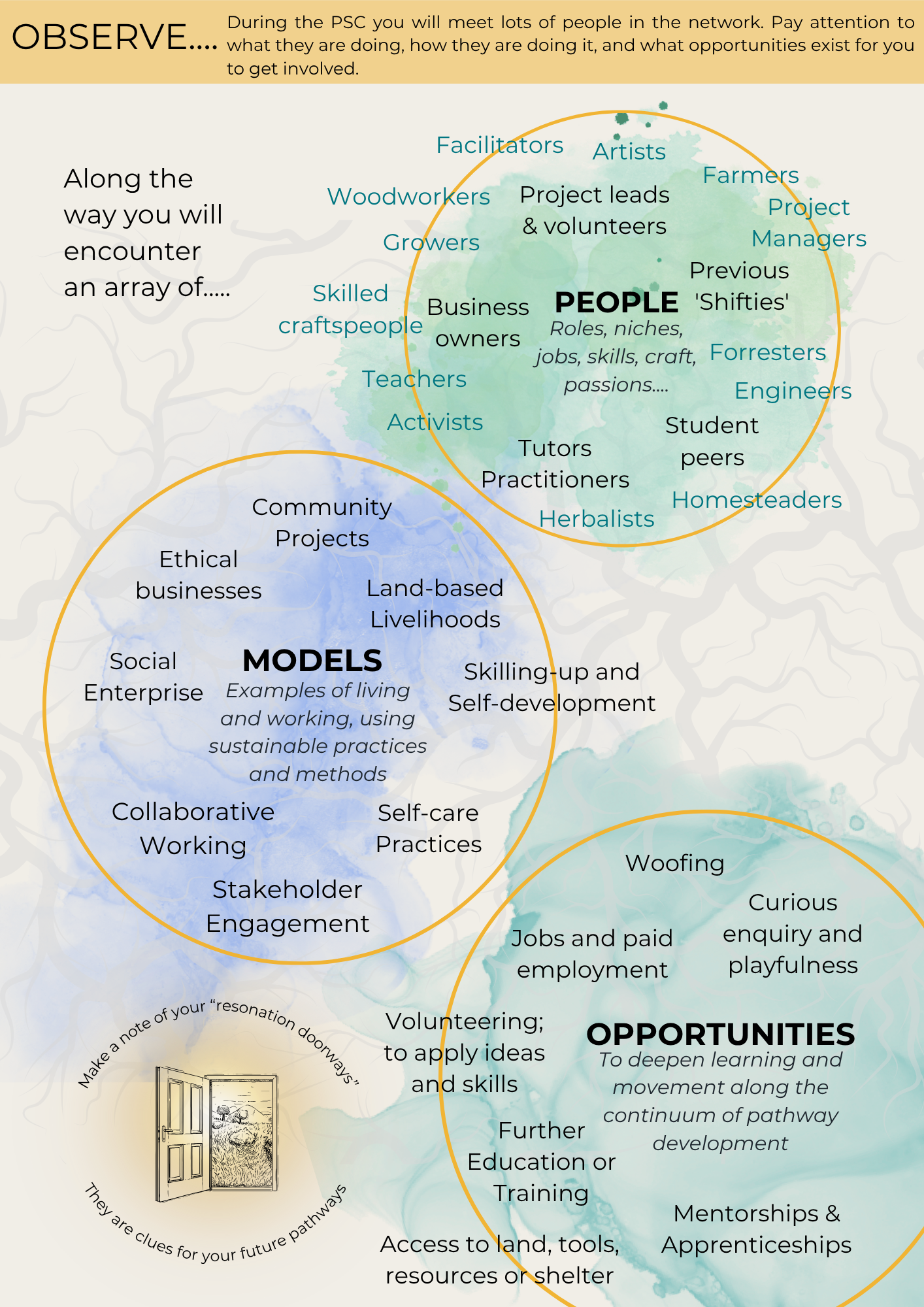
To connect with a network of active members within a thriving and collaborative community
To learn to love learning again
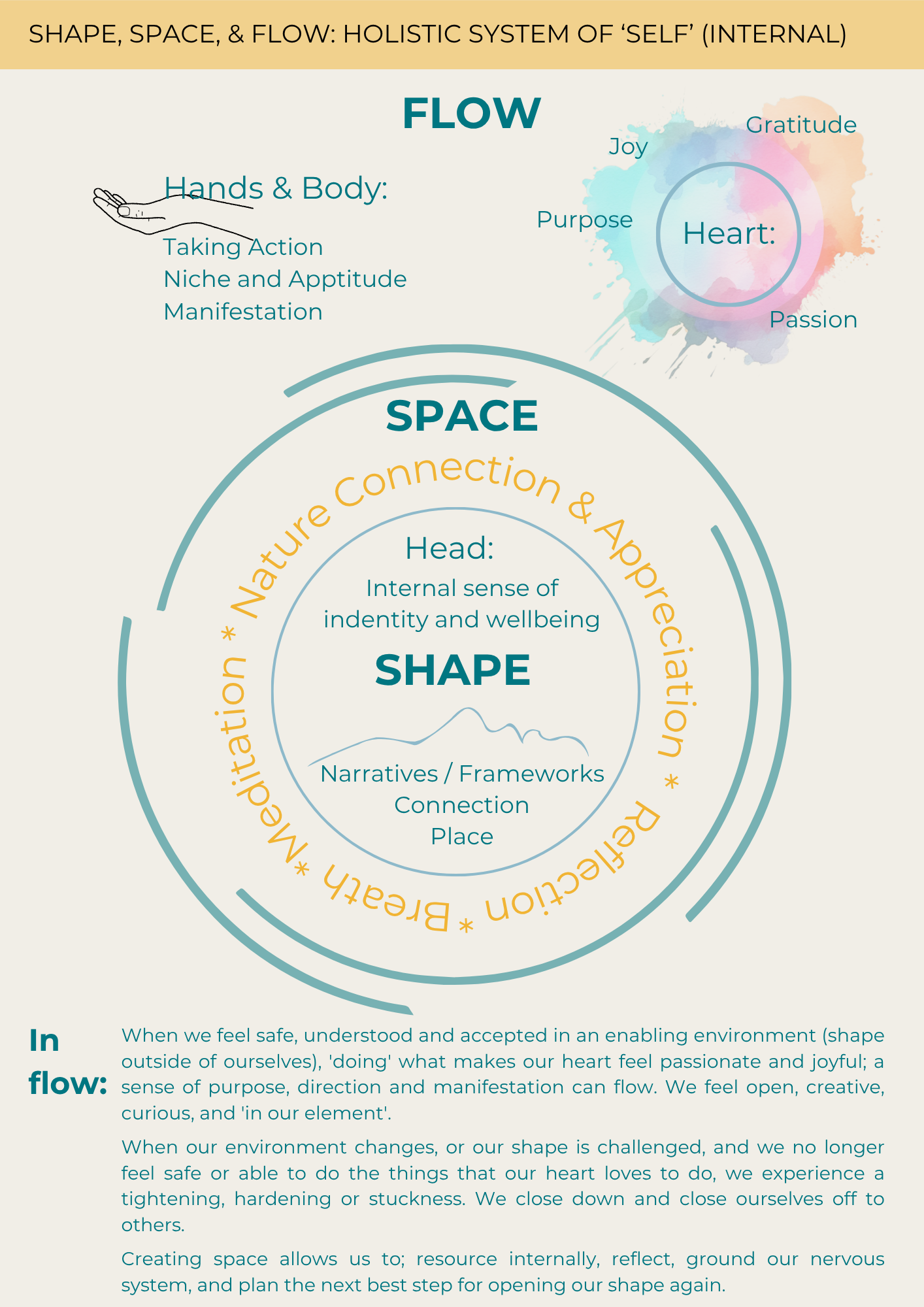
To broaden self-discovery into passion, drive, niche and your pathway forward
To cultivate a sense of empowerment and confidence to manifest your visions into reality
To kindle renewed hope in the face of uncertain times
To trust our ability to innovate and adapt to overcome challenges
To believe in our hand’s and body’s ability to grow and create beautiful things
To develop the agency and self-permission to take time to play and rest alongside the work
Course Content, Structure and Delivery
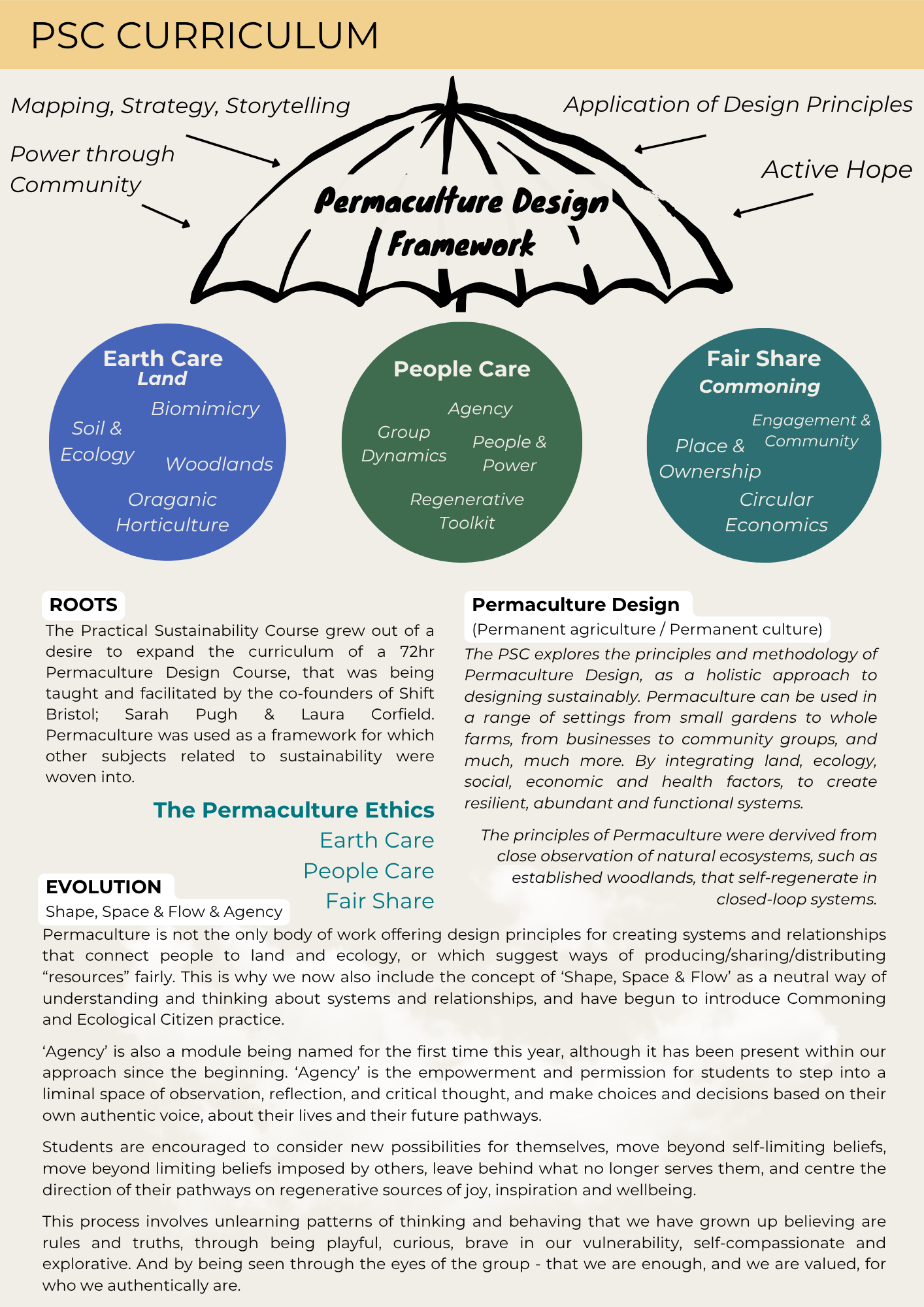
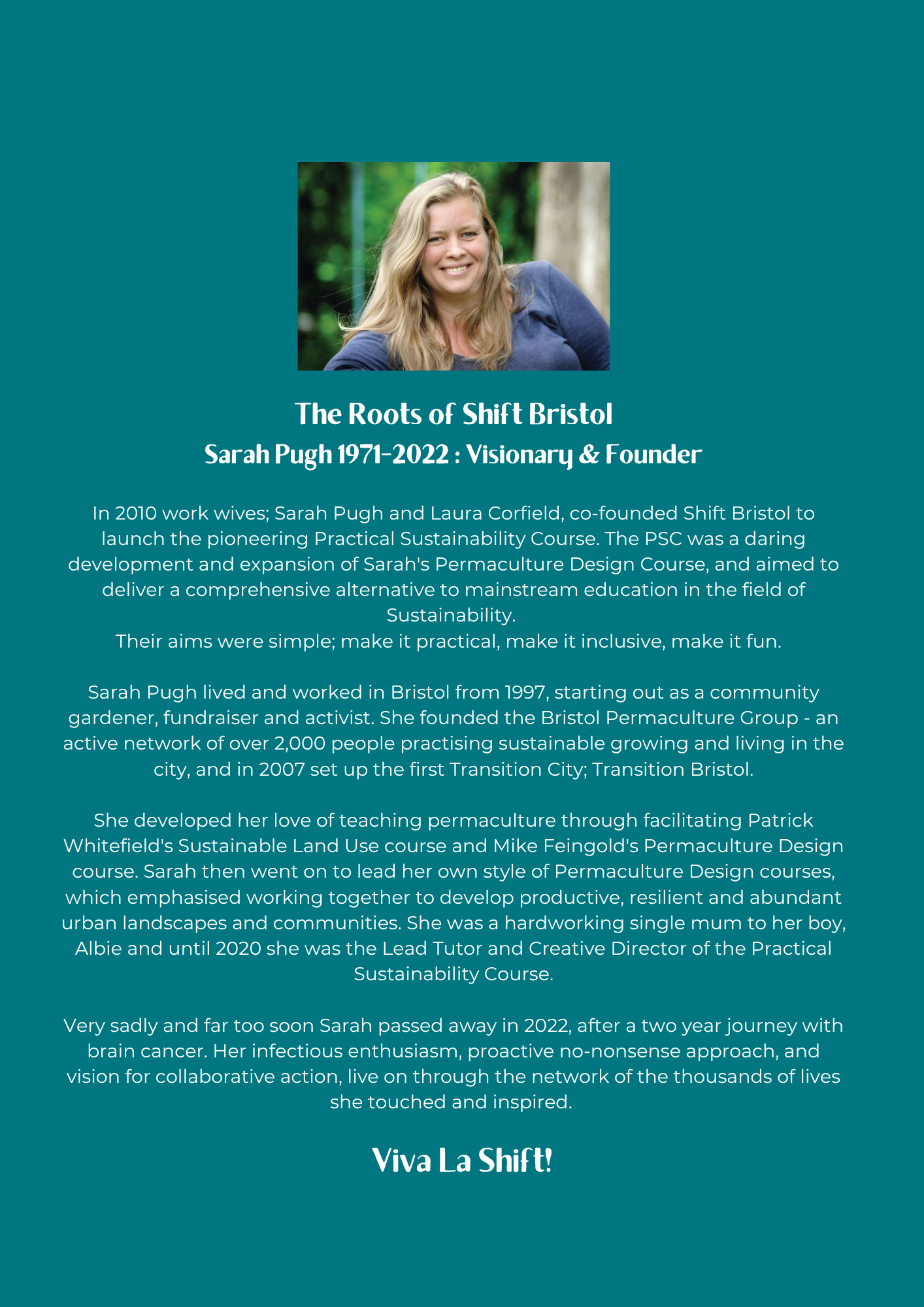
The PSC was born in 2010, out of the evolution and expansion of a Full Permaculture Design Course. It is made up of ten course modules that weave together into a circular curriculum of “Practical Sustainability”. Read more about our Roots here.
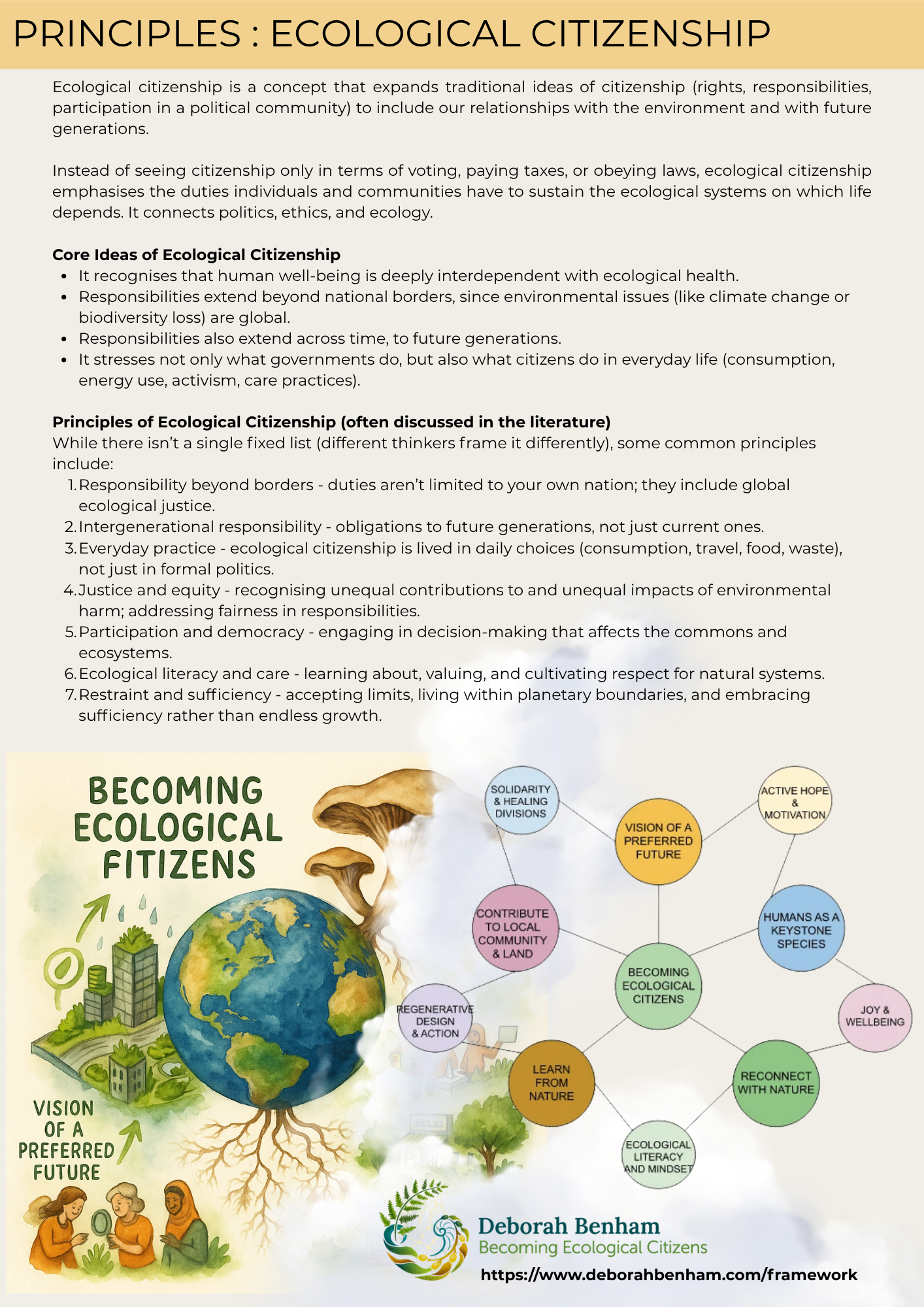
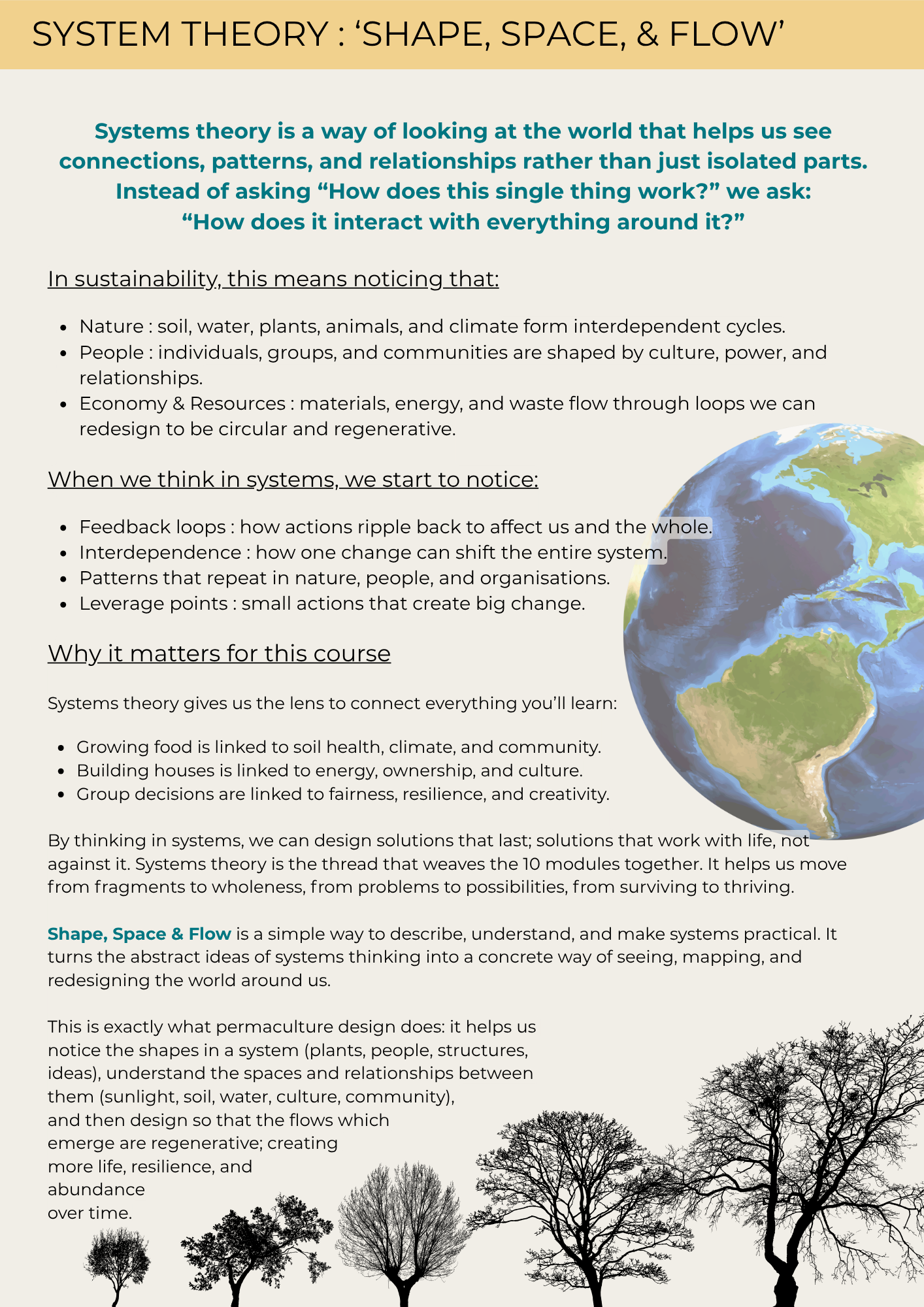
The PSC aims to deliver a holistic and wide-ranging educational experience that teaches effective sustainability practices for meeting needs (food, shelter, energy, comfort, health, connection etc), based in the context of real life parameters; that are also regenerative and joyful. Born out of our desire for Permaculture principles and design to be used to solve systemic problems, our curriculum is tailored not only to those wanting to gain skills and understanding for themselves as individuals but also for those who also want to help others on a community level.
Learning Journey
Each term is a carefully and thoughtfully designed step through the journey of the course as a whole journey:
Term 1: Permaculture as a paradigm and design framework to view the world
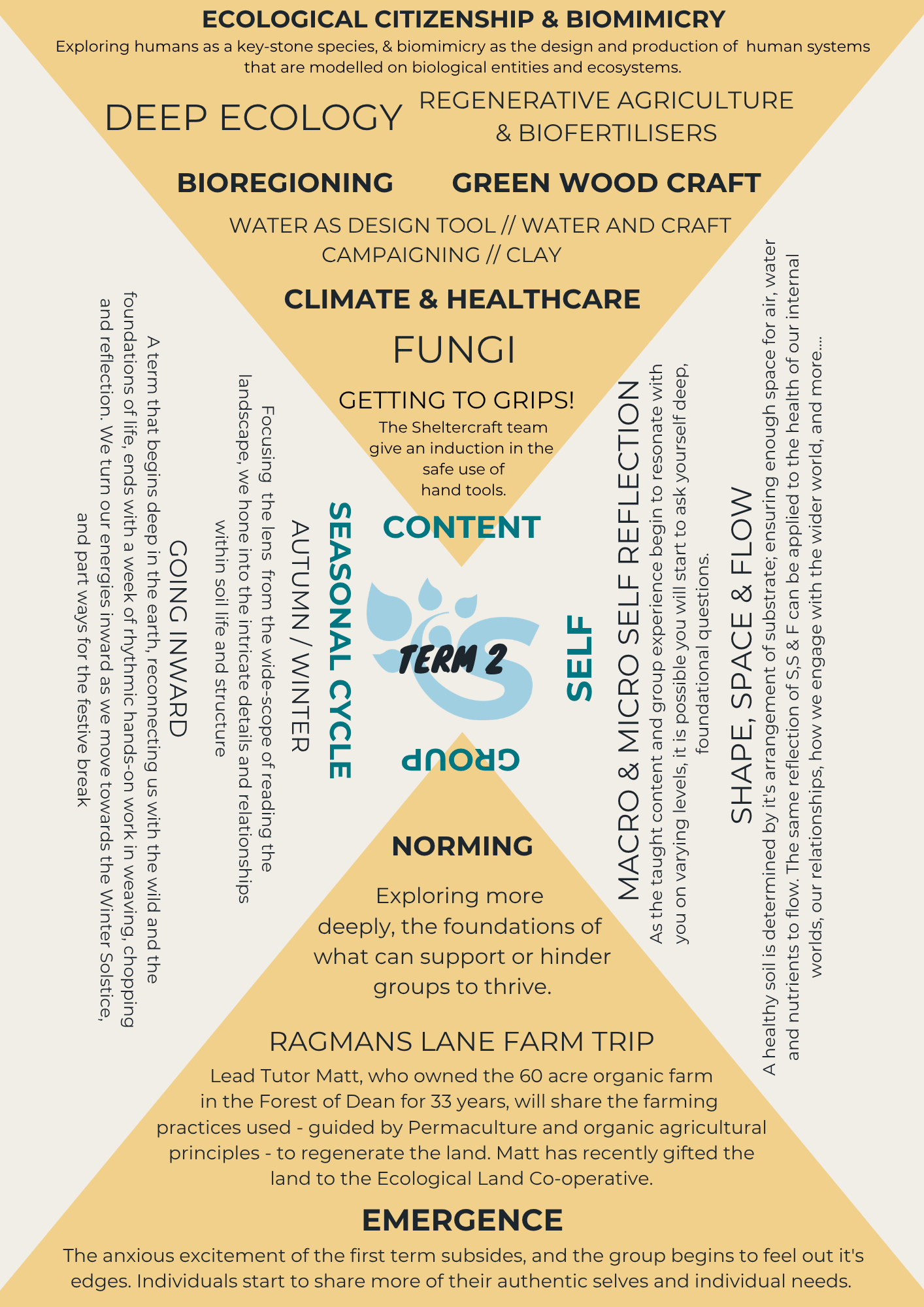
Term 2: Reading the landscape and building foundations for healthy, resilient systems
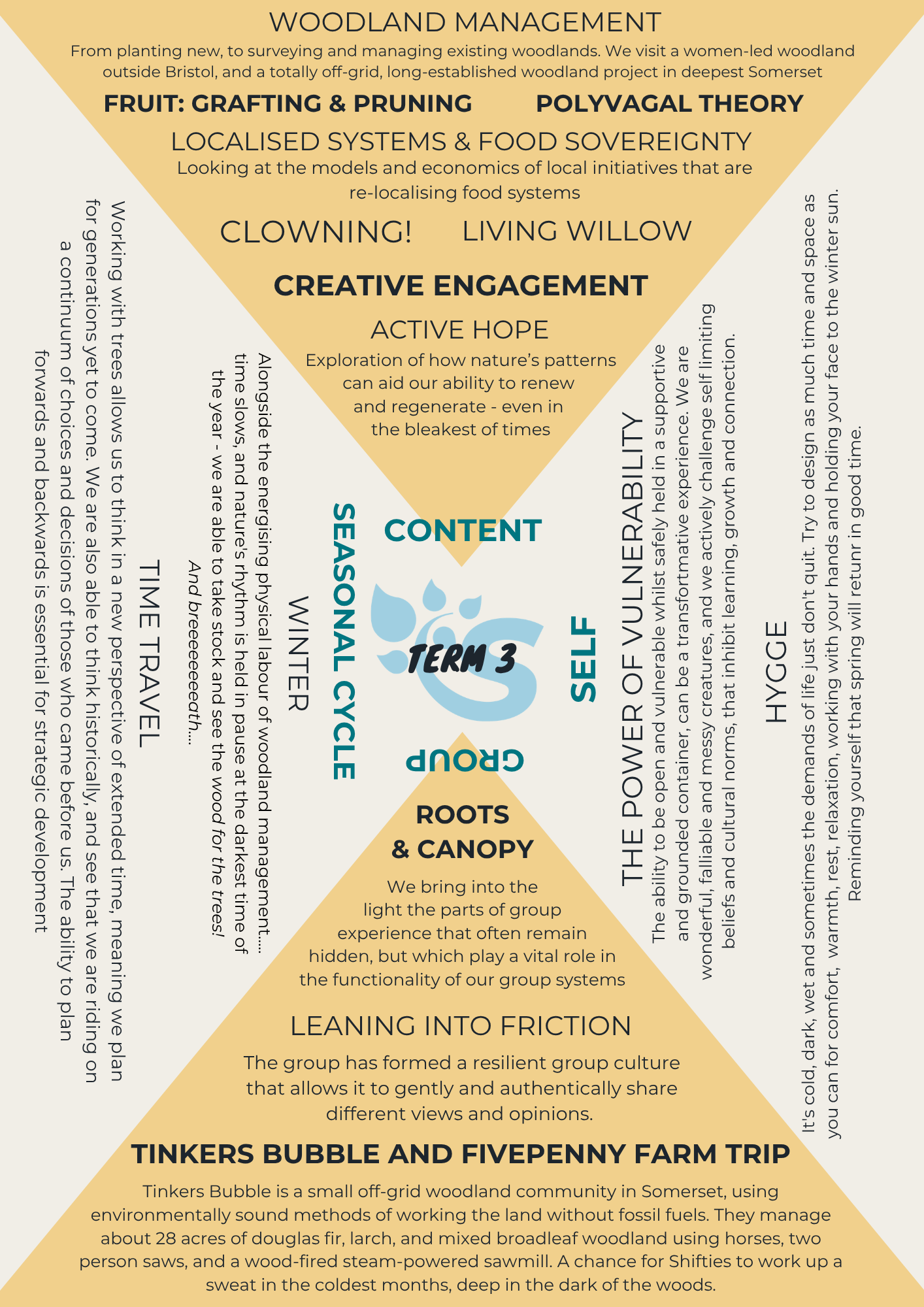
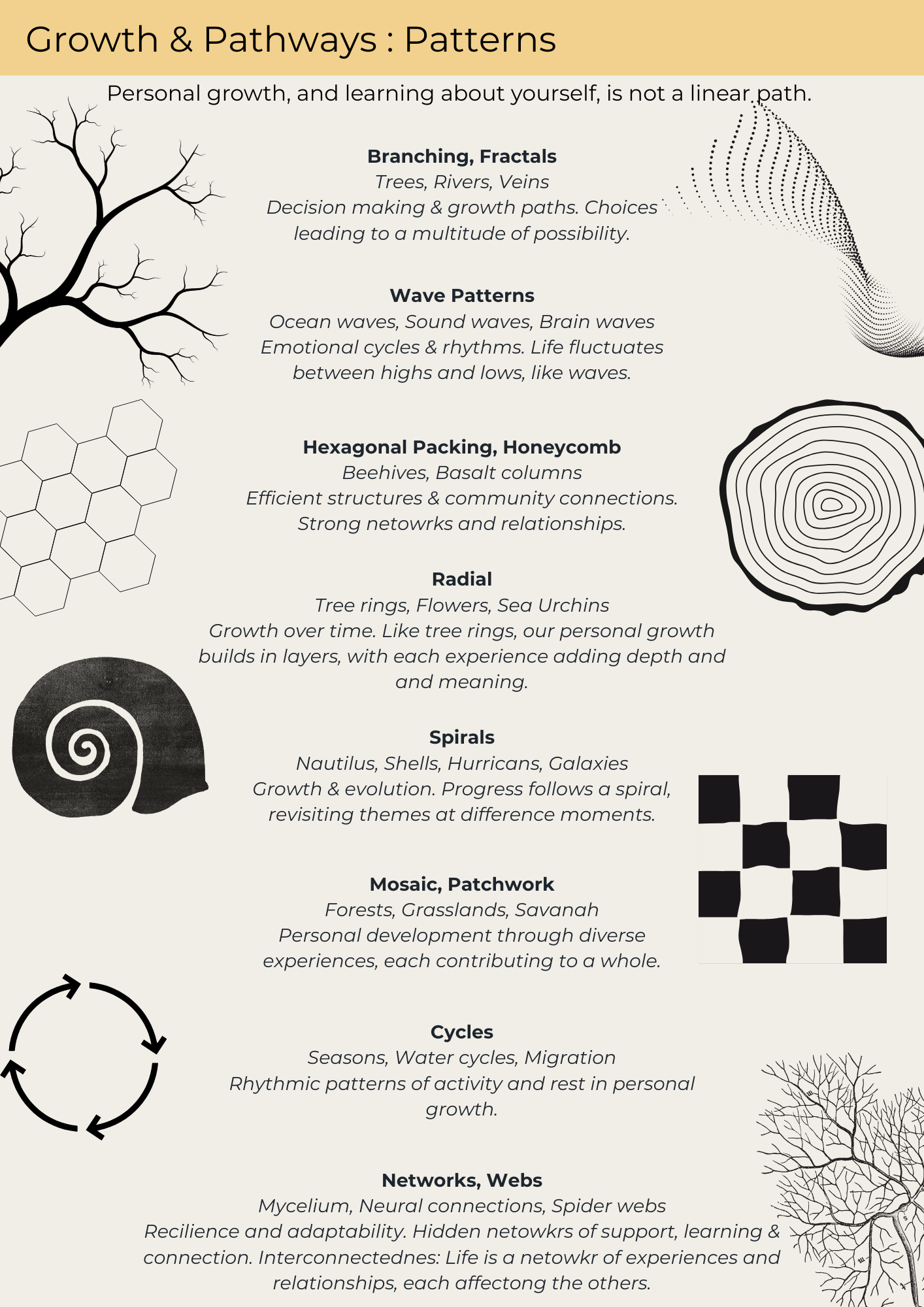
Term 3: The power of cycles for overcoming challenges and regrowth
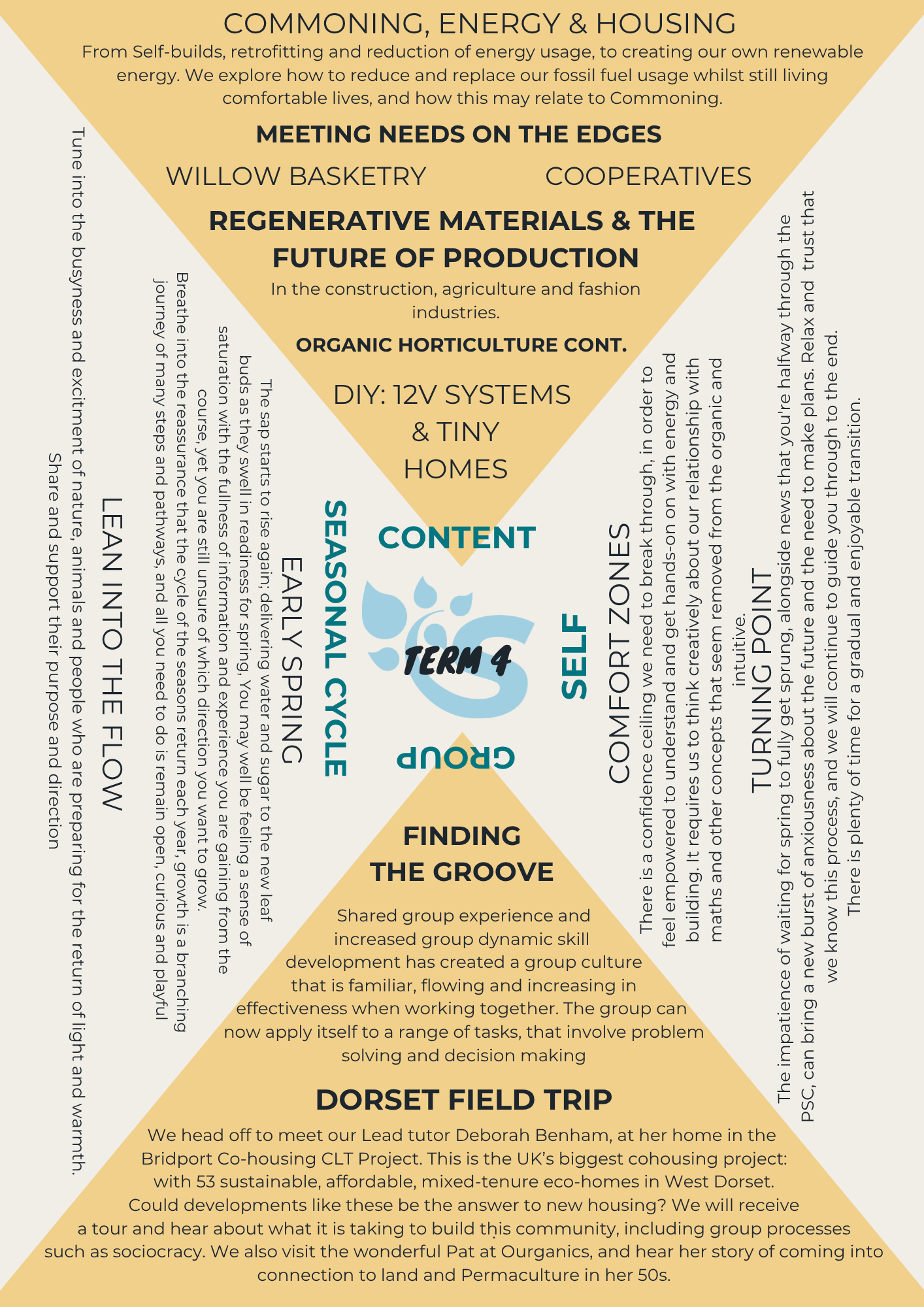
Term 4: Abundance; building, growing and manifesting change in a tangible way
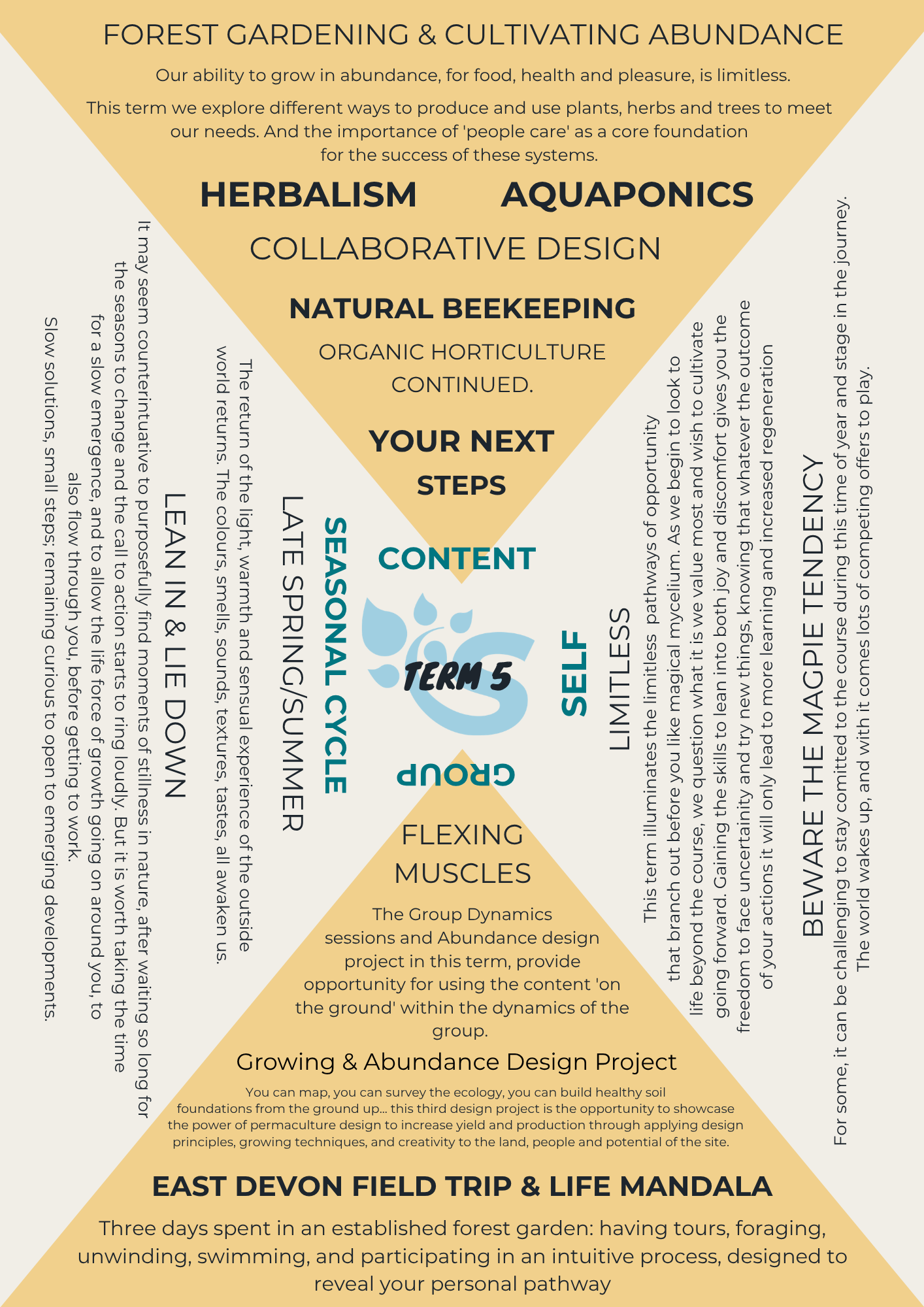
Terms 5: Systems in action: forest gardening, herbalist activism
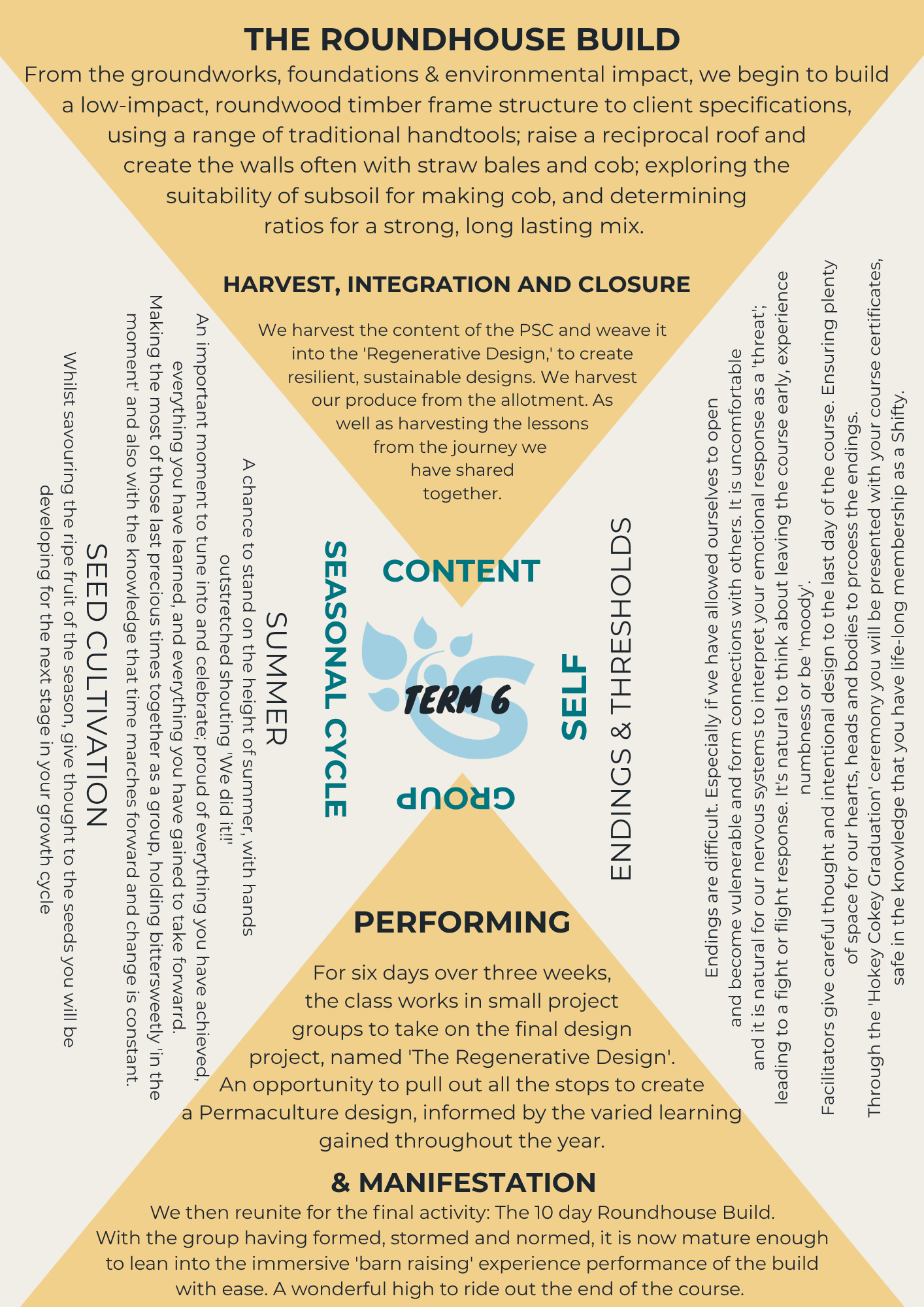
Term 6: The power of community to design regenerative systems and raise roundhouses.
Permaculture Design
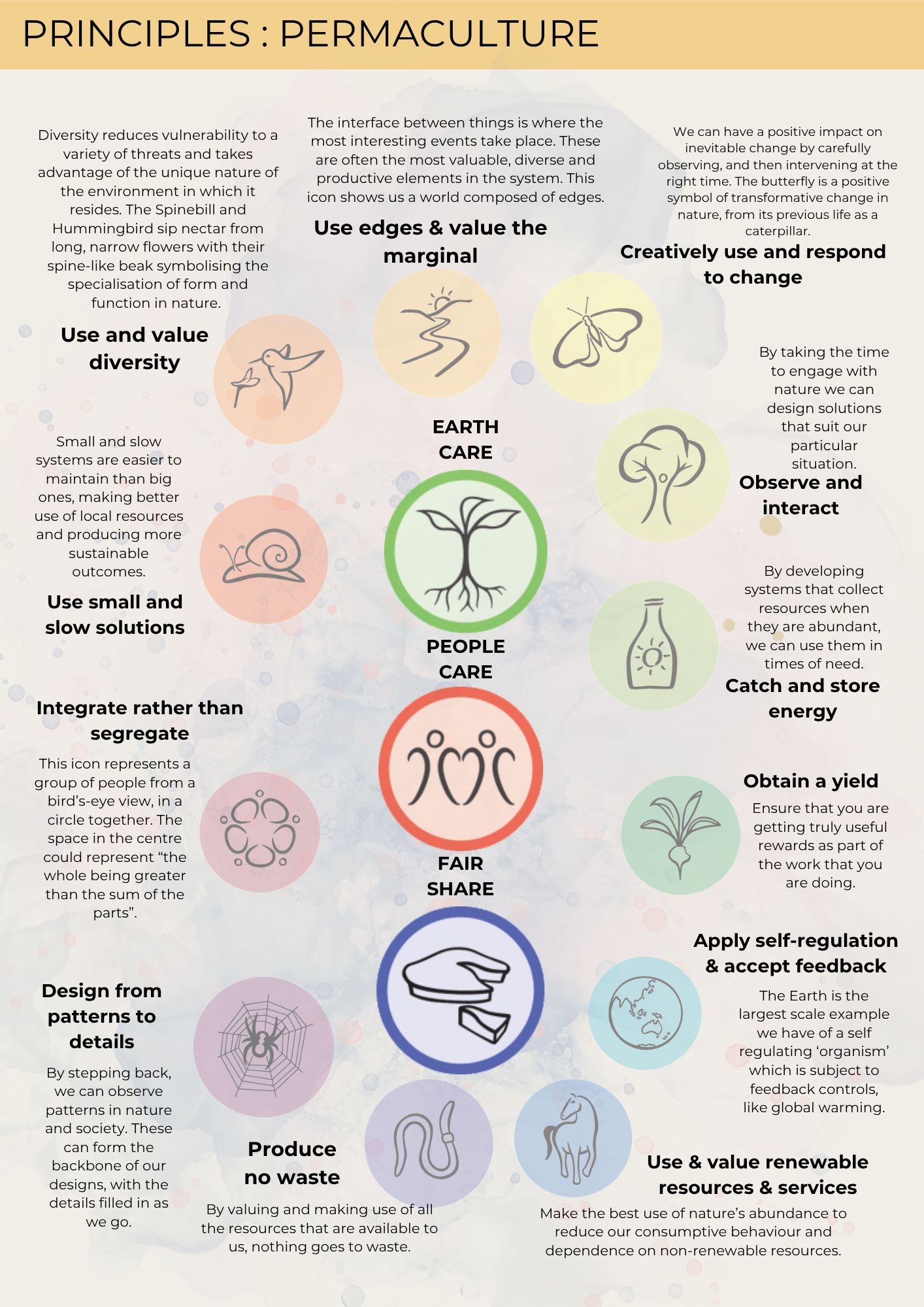
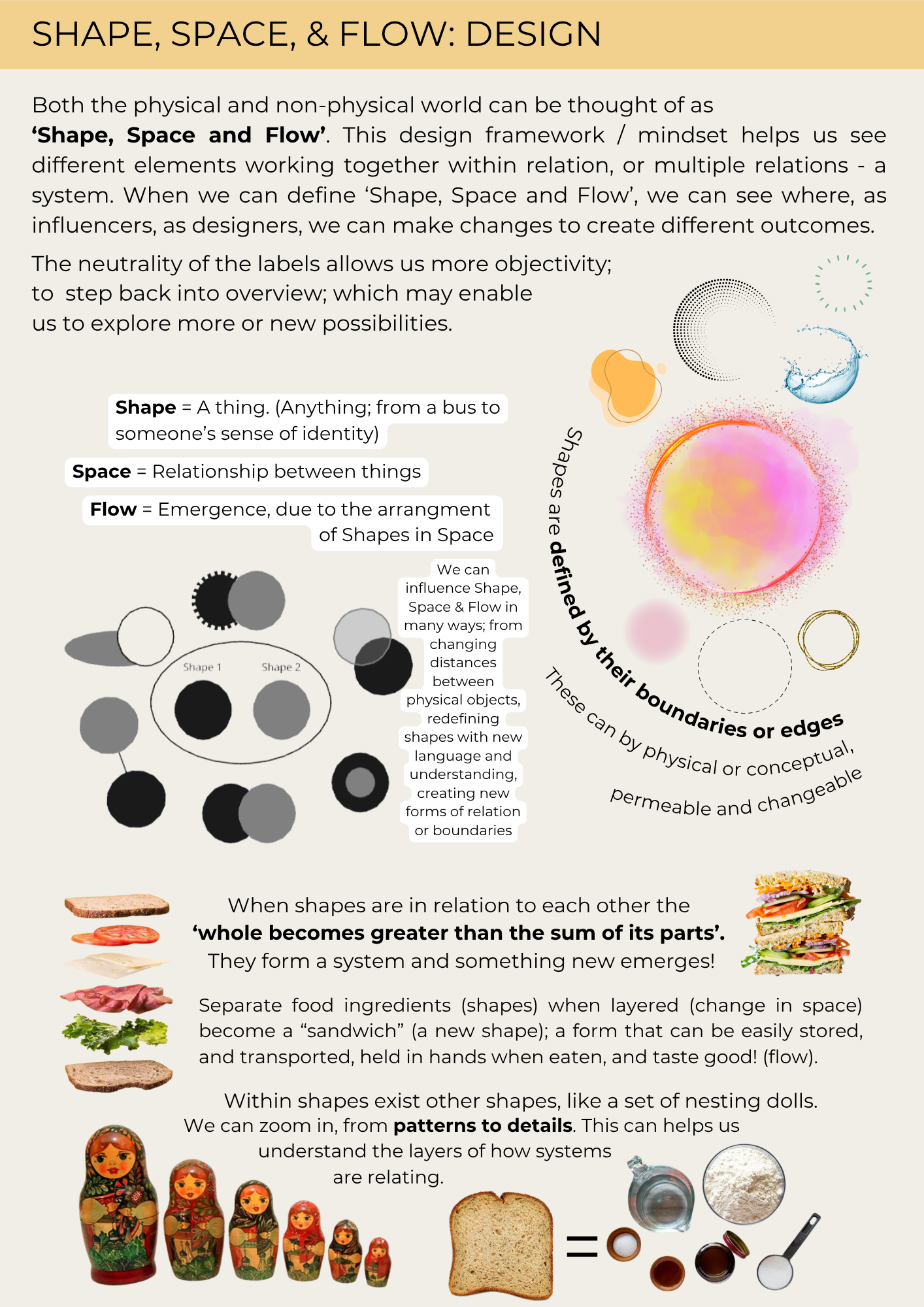
The course begins with an exploration of the principles and methodology of Permaculture Design; a holistic approach to designing sustainably, that can be used in a range of settings from small gardens to whole farms. Integrating land, ecology, social, economic and health factors, to create a resilient, abundant and functional system.
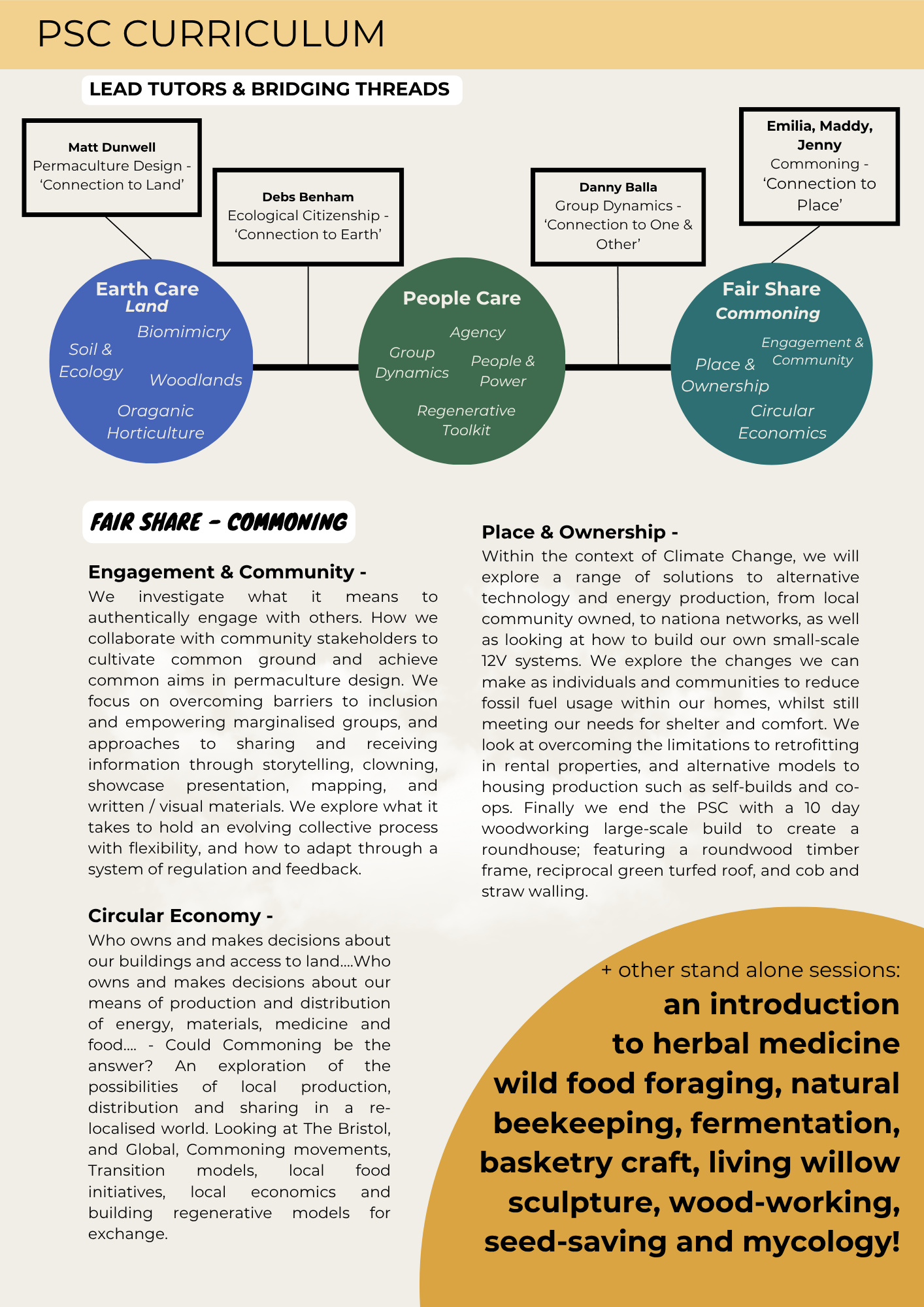
Fair Share - Commoning
Circular Economy
Who owns and makes decisions about our buildings and access to land….Who owns and makes decisions about our means of production and distribution of energy, materials, medicine and food…. - Could Commoning be the answer? An exploration of the possibilities of local production, distribution and sharing in a re-localised world. Looking at The Bristol, and Global, Commoning movements, Transition models, local food initiatives, local economics and building regenerative models for exchange.
Place & Ownership
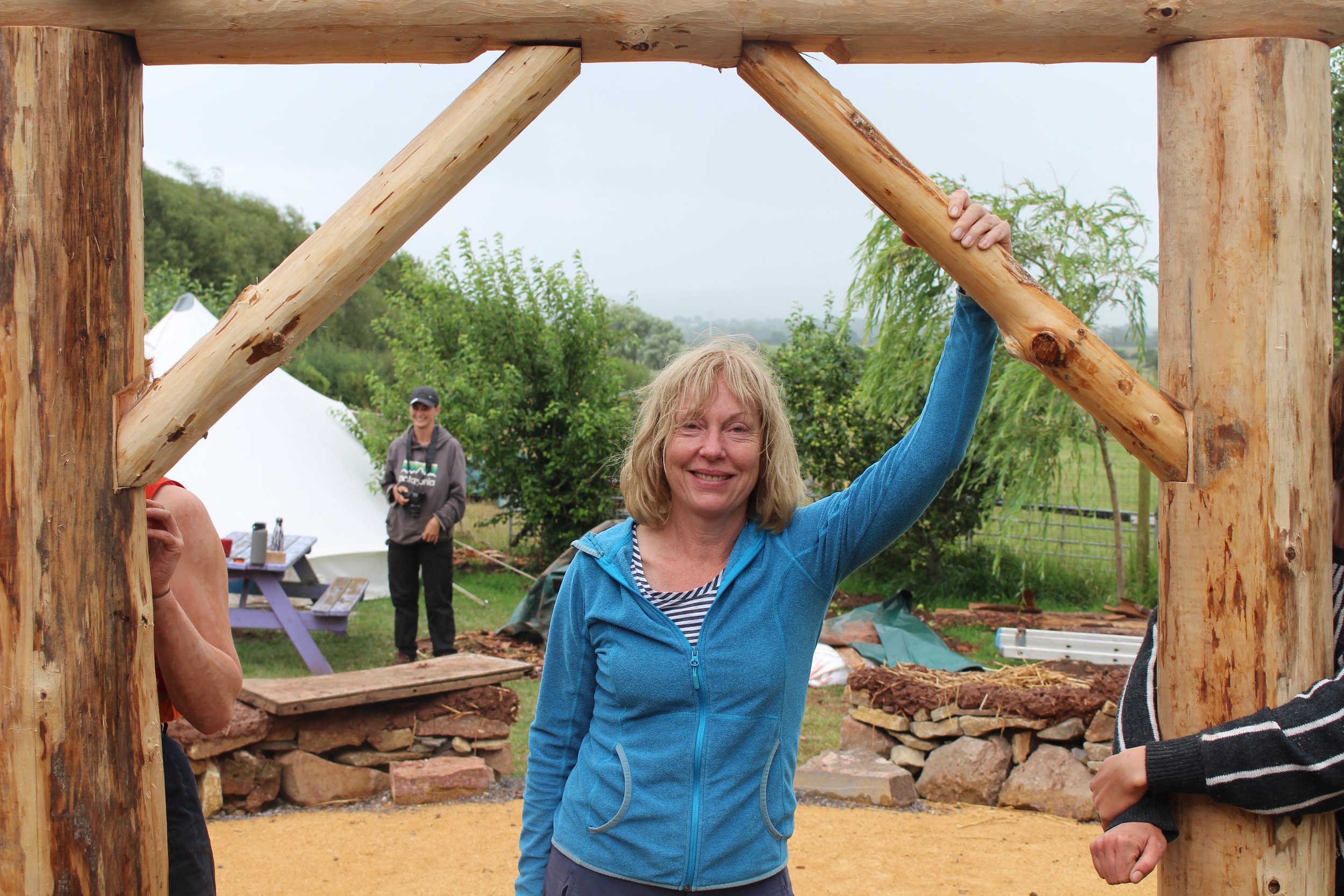
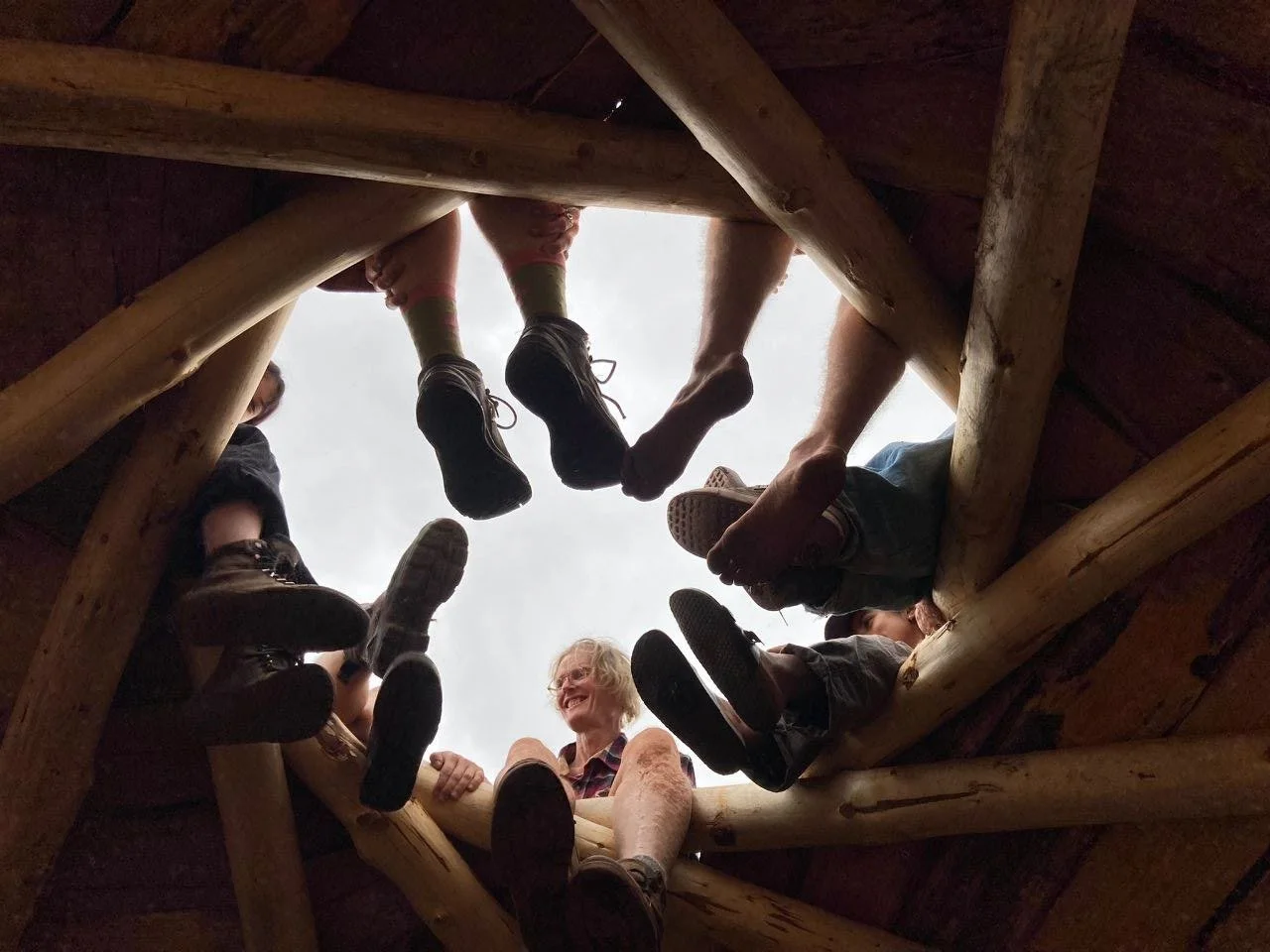
Within the context of Climate Change, we will explore a range of solutions to alternative technology and energy production, from local community owned, to national networks, as well as looking at how to build our own small-scale 12V systems. We explore the changes we can make as individuals and communities to reduce fossil fuel usage within our homes, whilst still meeting our needs for shelter and comfort. We look at overcoming the limitations to retrofitting in rental properties, and alternative models to housing production such as self-builds and co-ops. Finally we end the PSC with a 10 day woodworking large-scale build to create a roundhouse; featuring a roundwood timber frame, reciprocal green turfed roof, and cob and straw walling.
Engagement
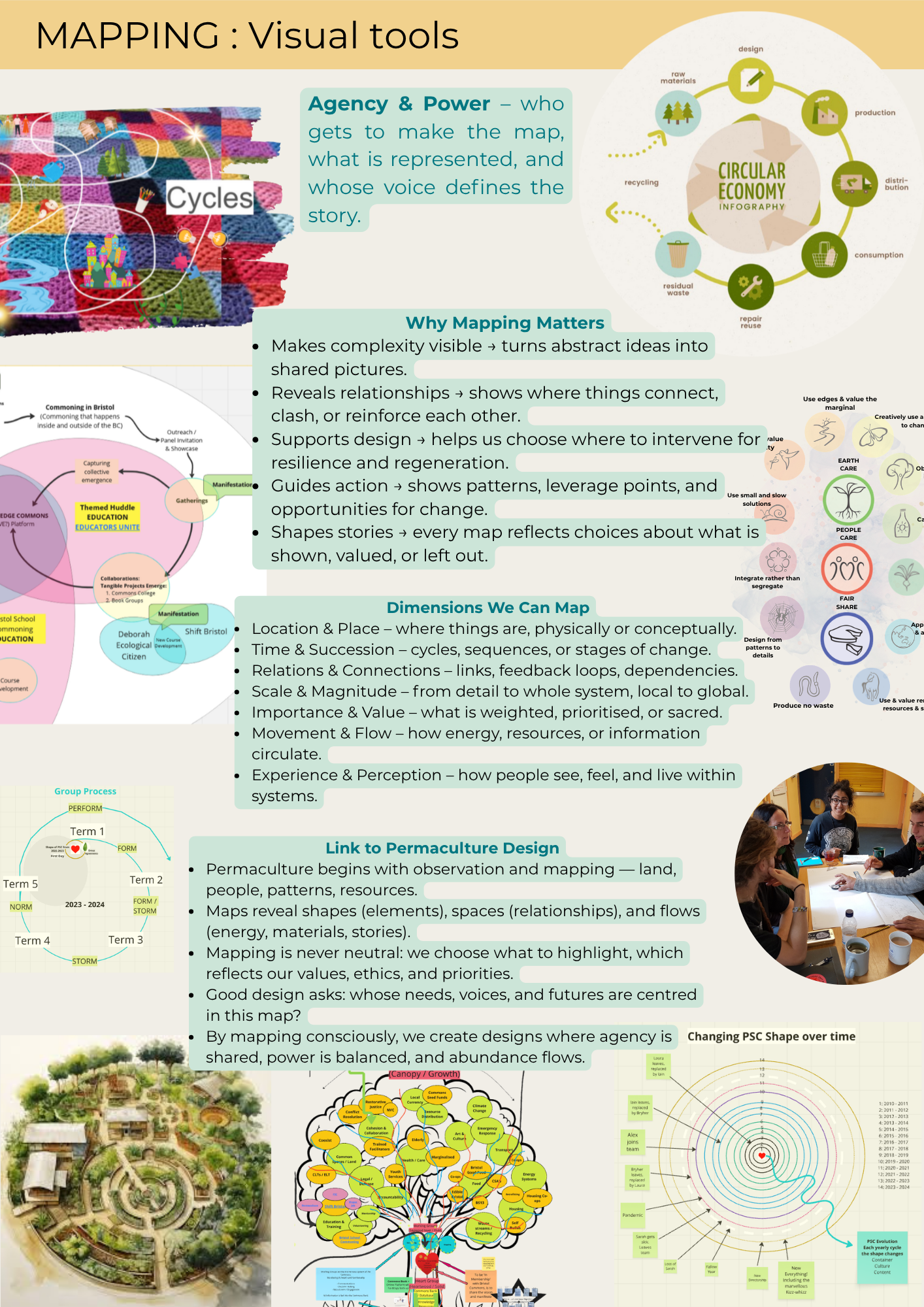
We investigate what it means to authentically engage with others. How we collaborate with community stakeholders to cultivate common ground and achieve common aims in permaculture design. We focus on overcoming barriers to inclusion and empowering marginalised groups, and approaches to sharing and receiving information through storytelling, clowning, showcase presentation, mapping, and written / visual materials. We explore what it takes to hold an evolving collective process with flexibility, and how to adapt through a system of regulation and feedback.

Earth Care - Land
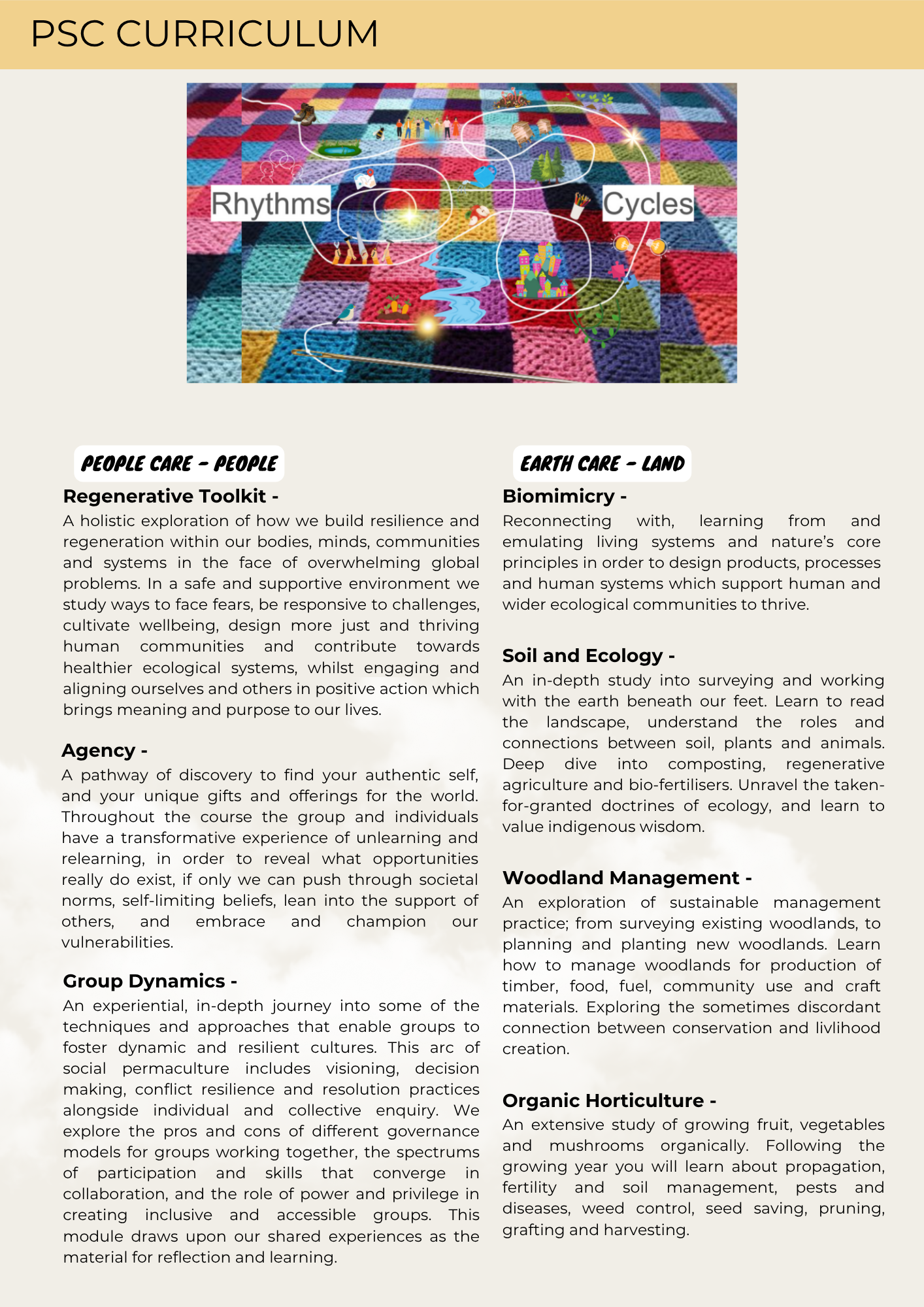
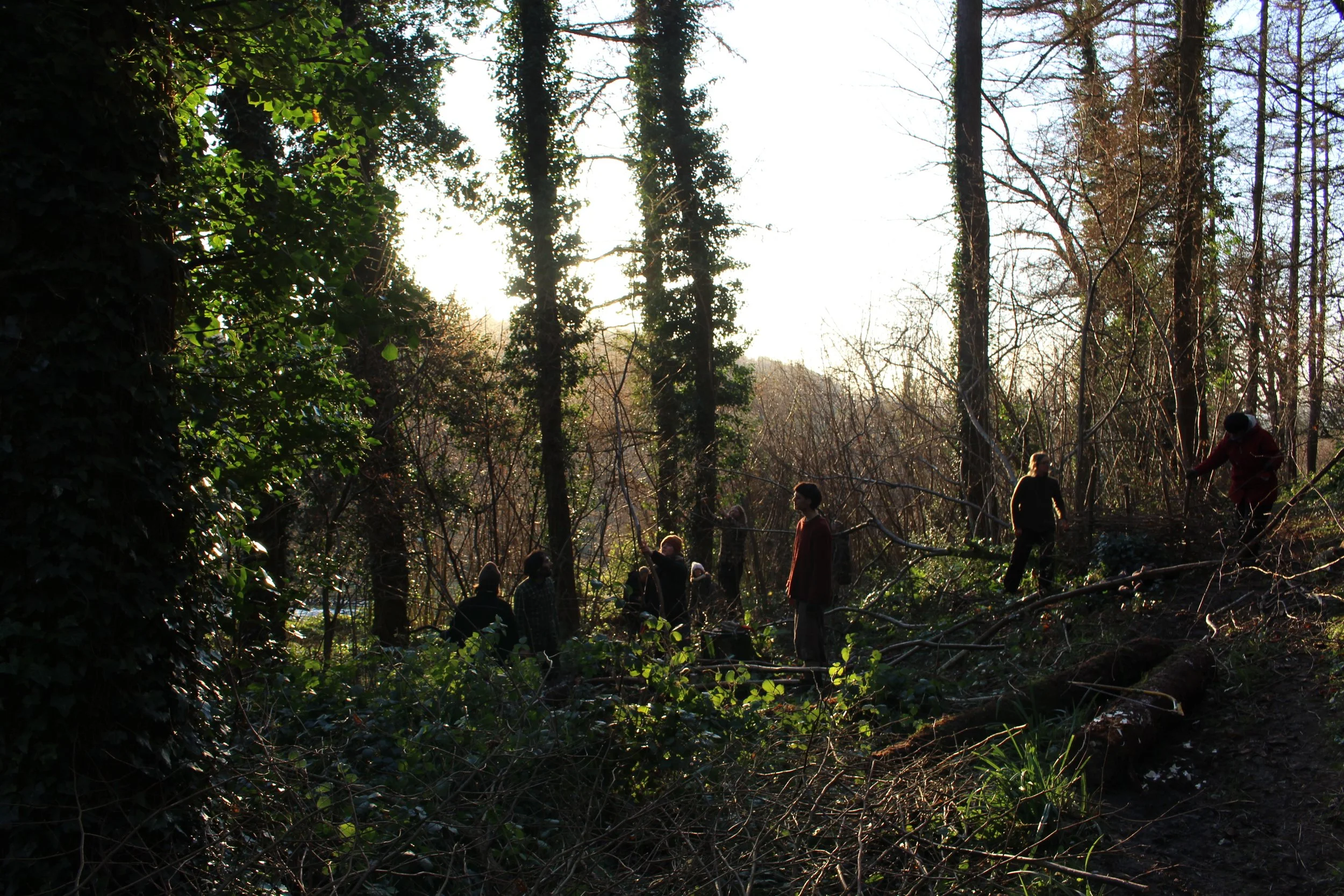
Woodland Management
An exploration of sustainable management practice; from surveying existing woodlands, to planning and planting new woodlands. Learn how to manage woodlands for production of timber, food, fuel, community use and craft materials.
Organic Horticulture
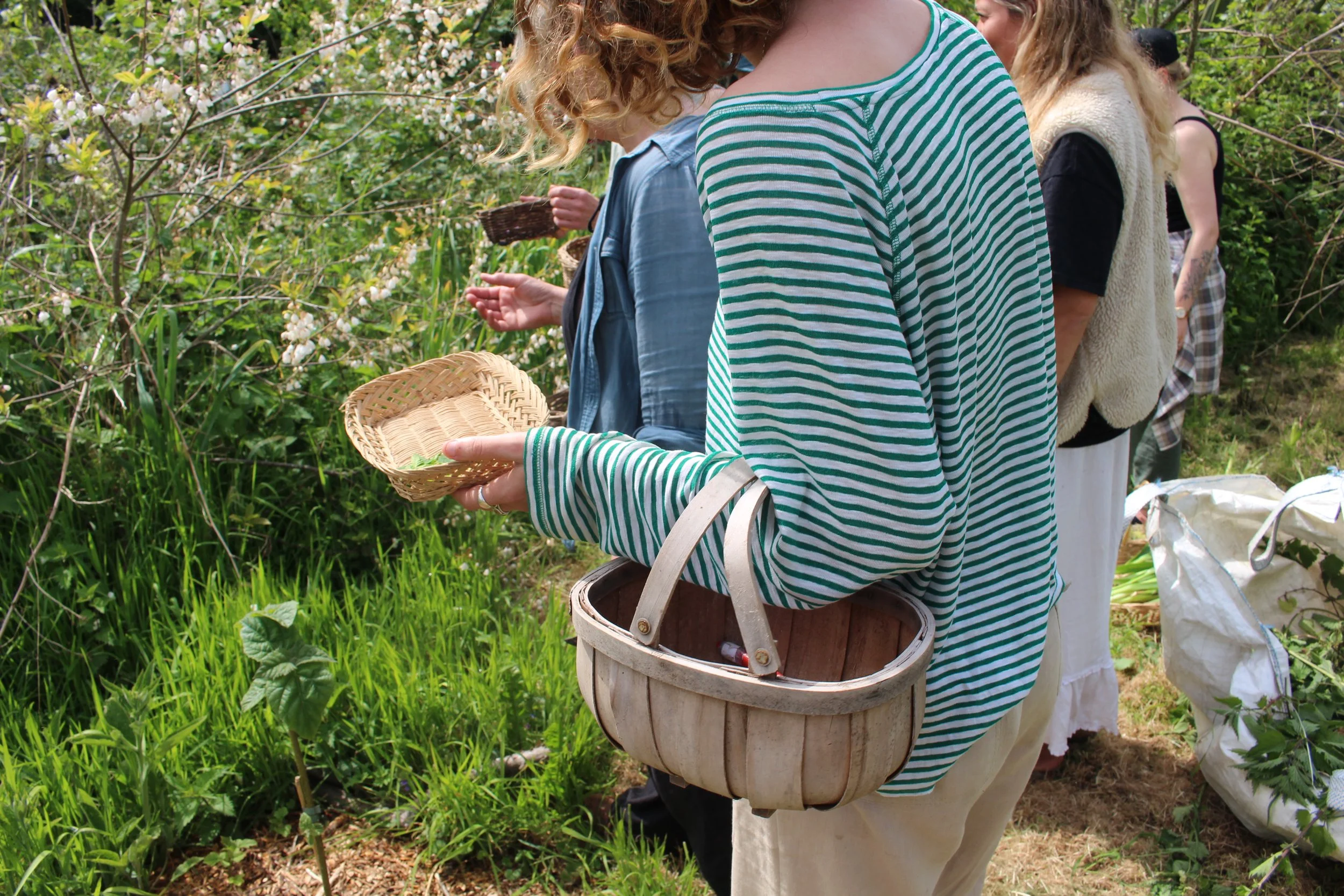
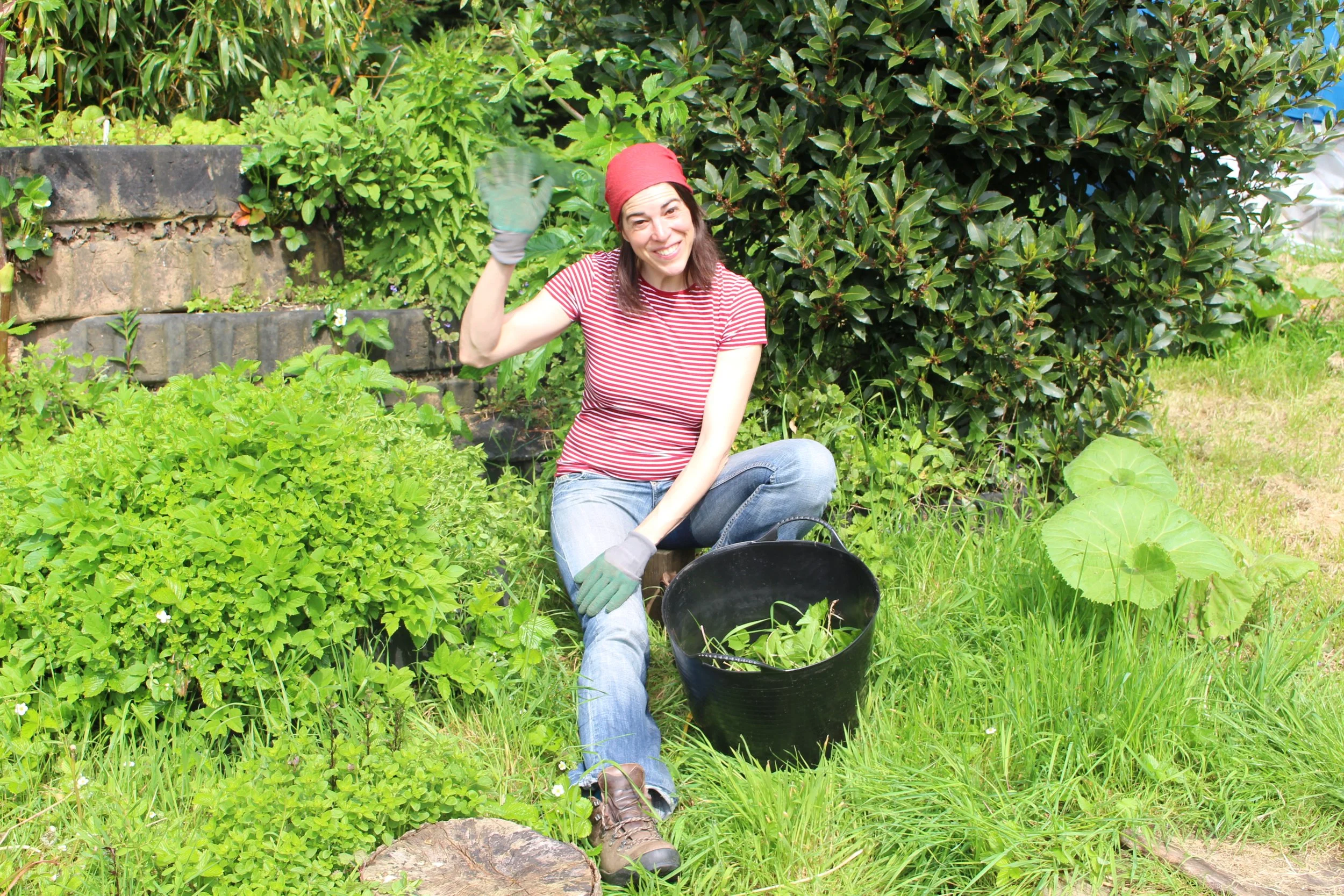
An extensive study of growing fruit, vegetables and mushrooms organically. Following the growing year you will learn about propagation, fertility and soil management, pests and diseases, weed control, seed saving, pruning, grafting and harvesting.
Soil and Ecology
An in-depth study into surveying and working with the earth beneath our feet. Learn to read the landscape, understand the roles and connections between soil, plants and animals. Includes composting and bio-brew sessions.
Biomimicry
Reconnecting with, learning from and emulating living systems and nature’s core principles in order to design products, processes and human systems which support human and wider ecological communities to thrive.
People Care
Regenerative Toolkit
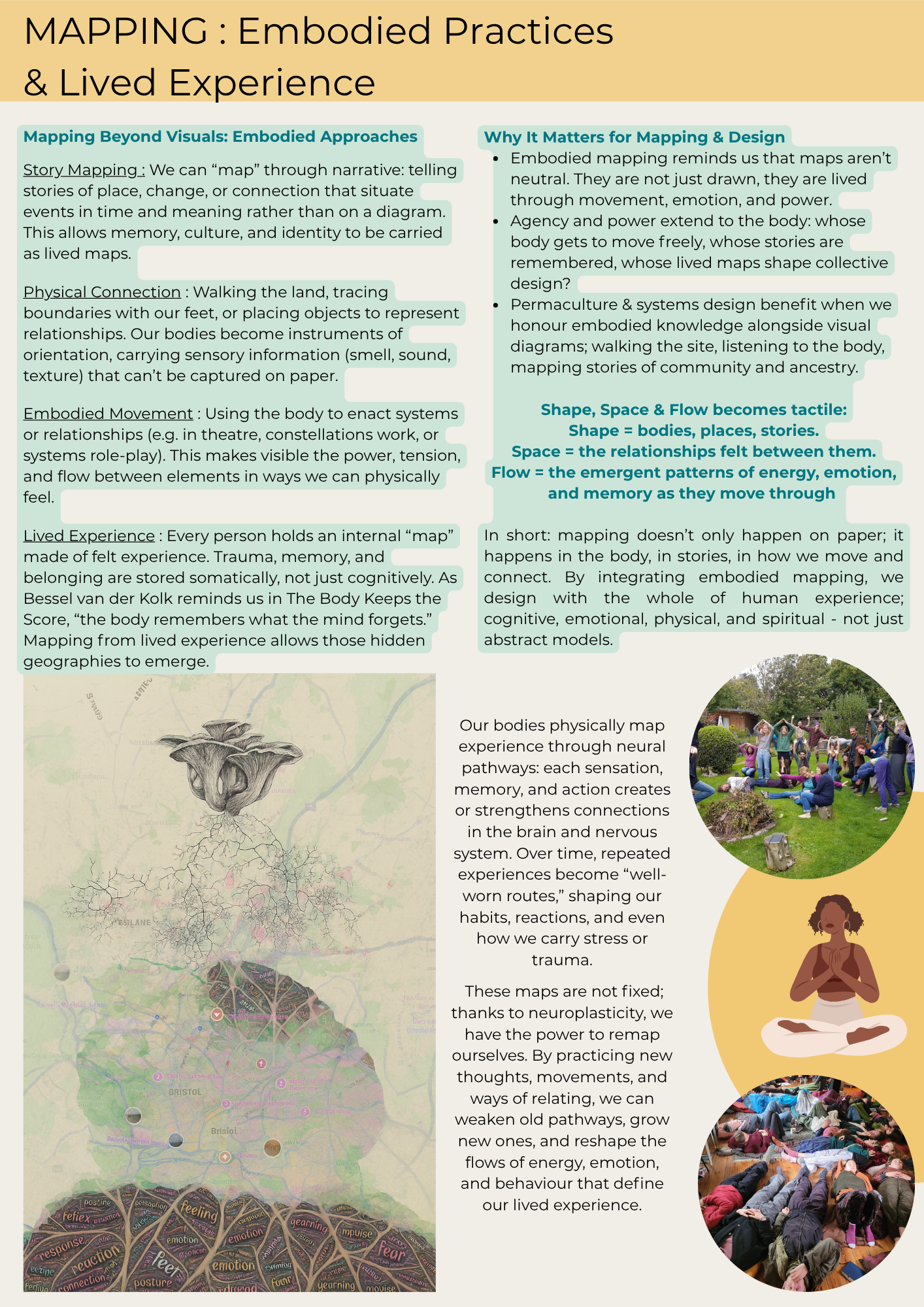
A holistic exploration of how we build resilience and regeneration within our bodies, minds, communities and systems in the face of overwhelming global problems. In a safe and supportive environment we study ways to face fears, be responsive to challenges, cultivate wellbeing, design more just and thriving human communities and contribute towards healthier ecological systems, whilst engaging and aligning ourselves and others in positive action which brings meaning and purpose to our lives.
Agency
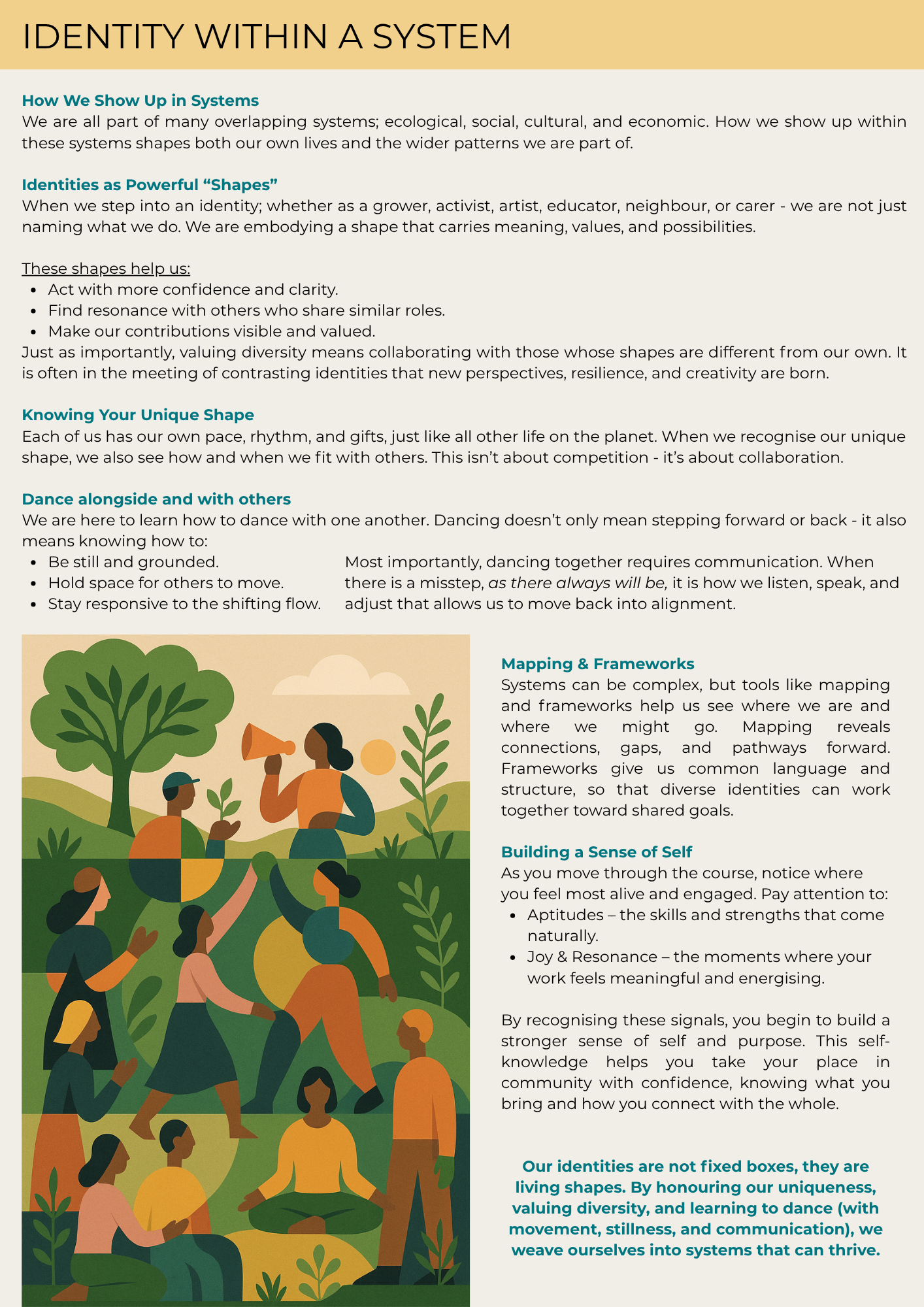
A pathway of discovery to find your authentic self, and your unique gifts and offerings for the world. Throughout the course the group and individuals have a transformative experience of unlearning and relearning, in order to reveal what opportunities really do exist, if only we can push through societal norms, self-limiting beliefs, lean into the support of others, and embrace and champion our vulnerabilities.
Group Dynamics
An in-depth study of the techniques and approaches that enable groups to face challenges creatively and positively. Including visioning, decision making, consensus and conflict resolution. We discuss the pros and cons of different governance models for groups working together.. This module utilises the coming together of the student group as a rich resource for reflection and learning.
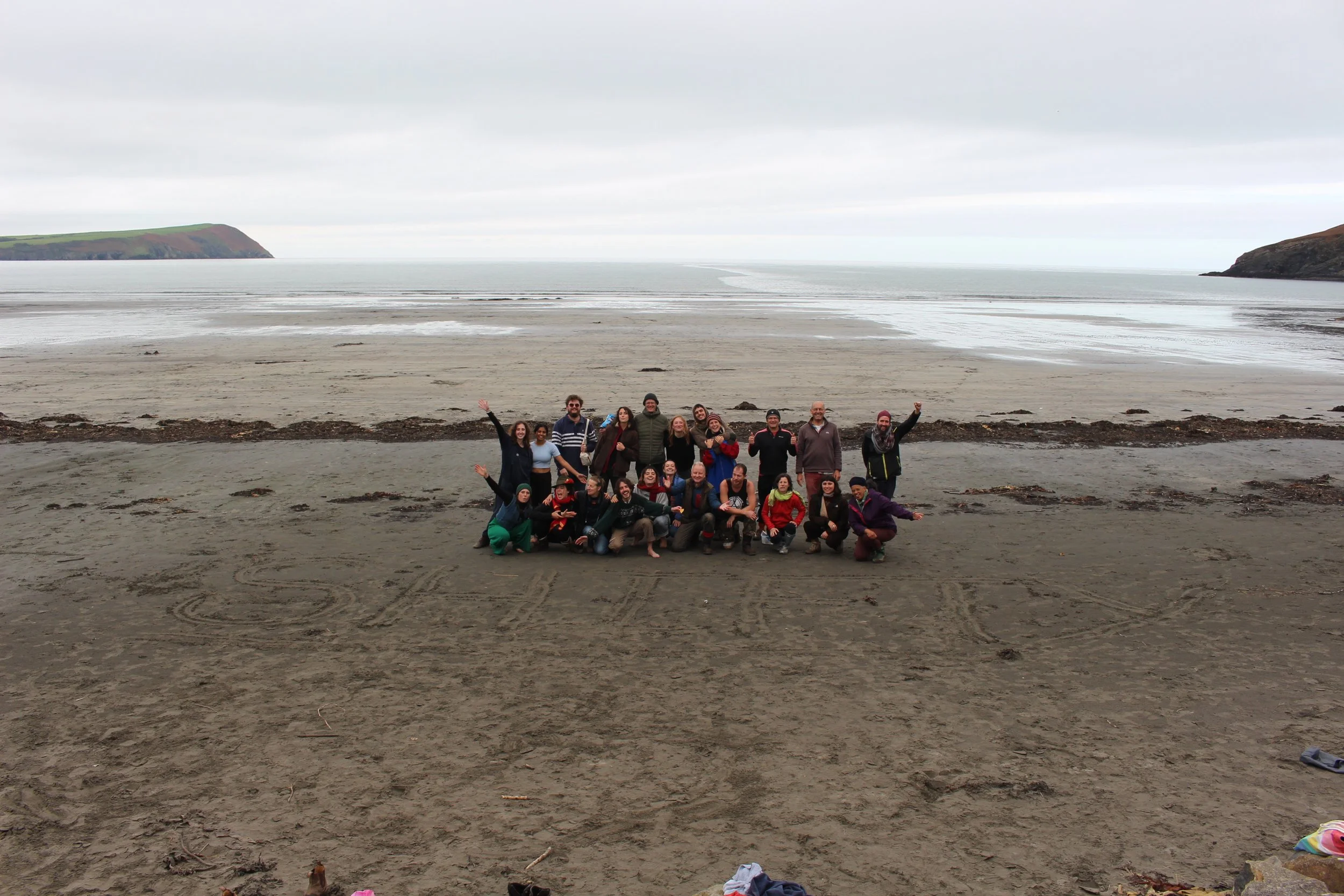
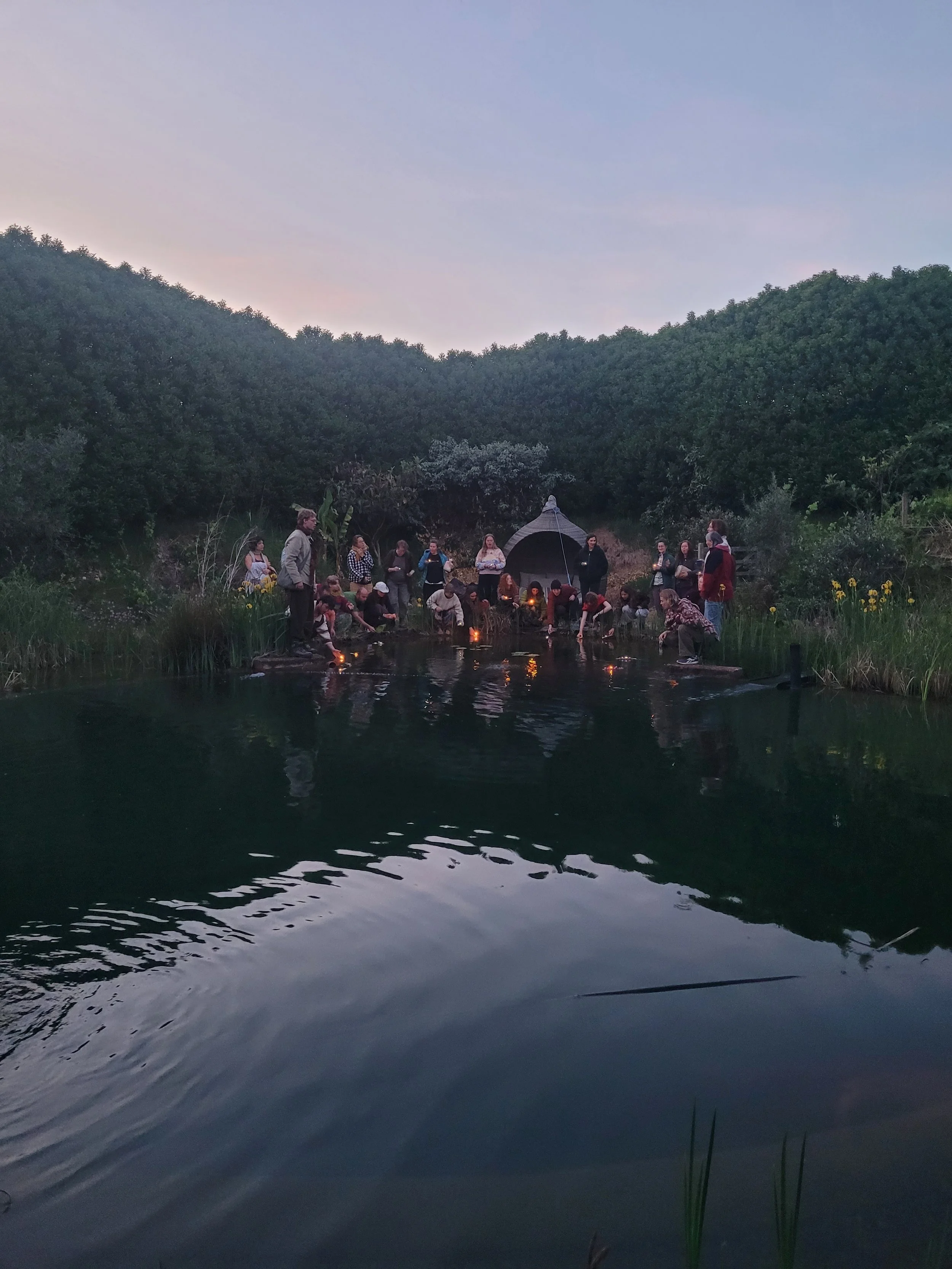
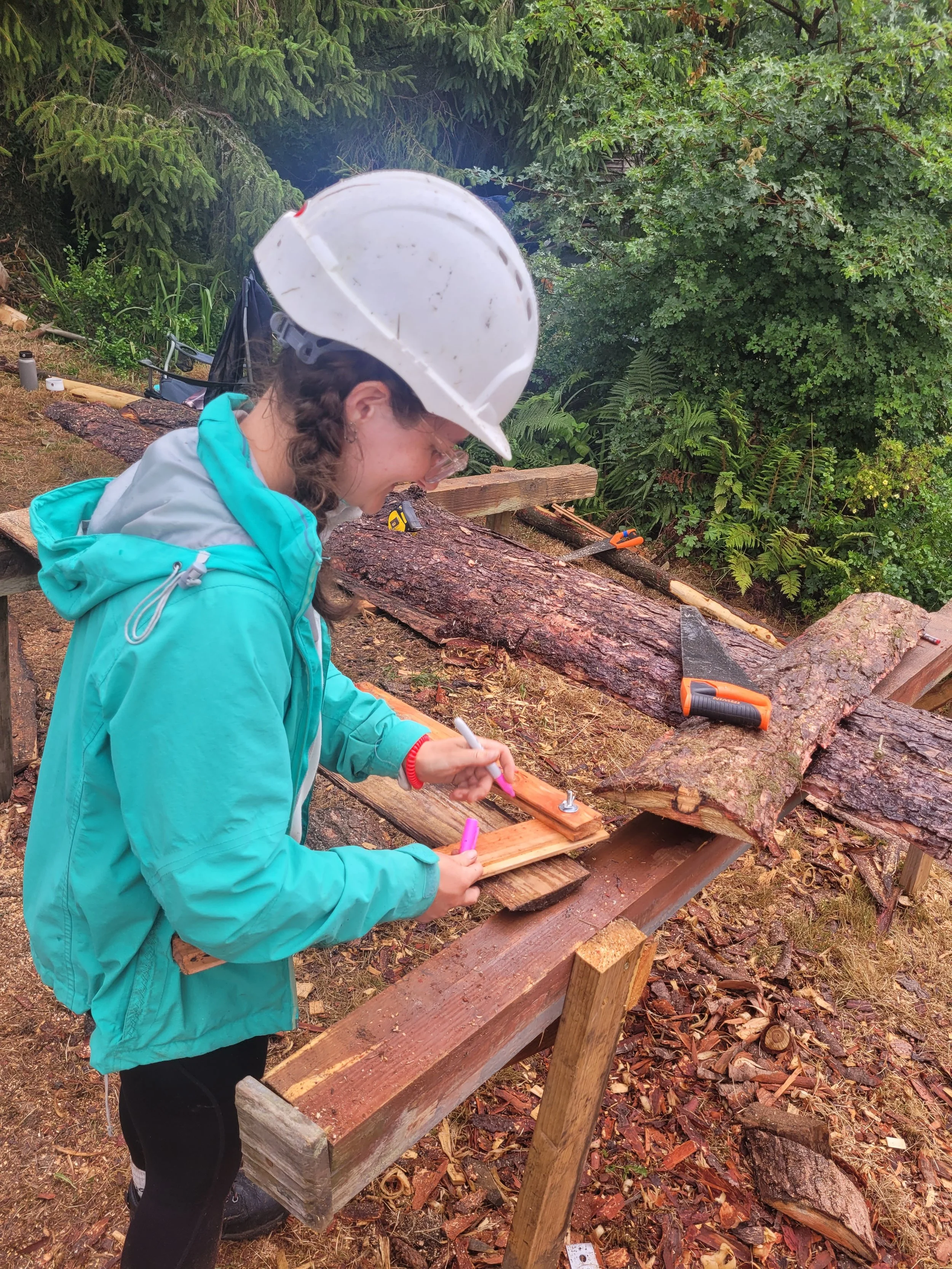
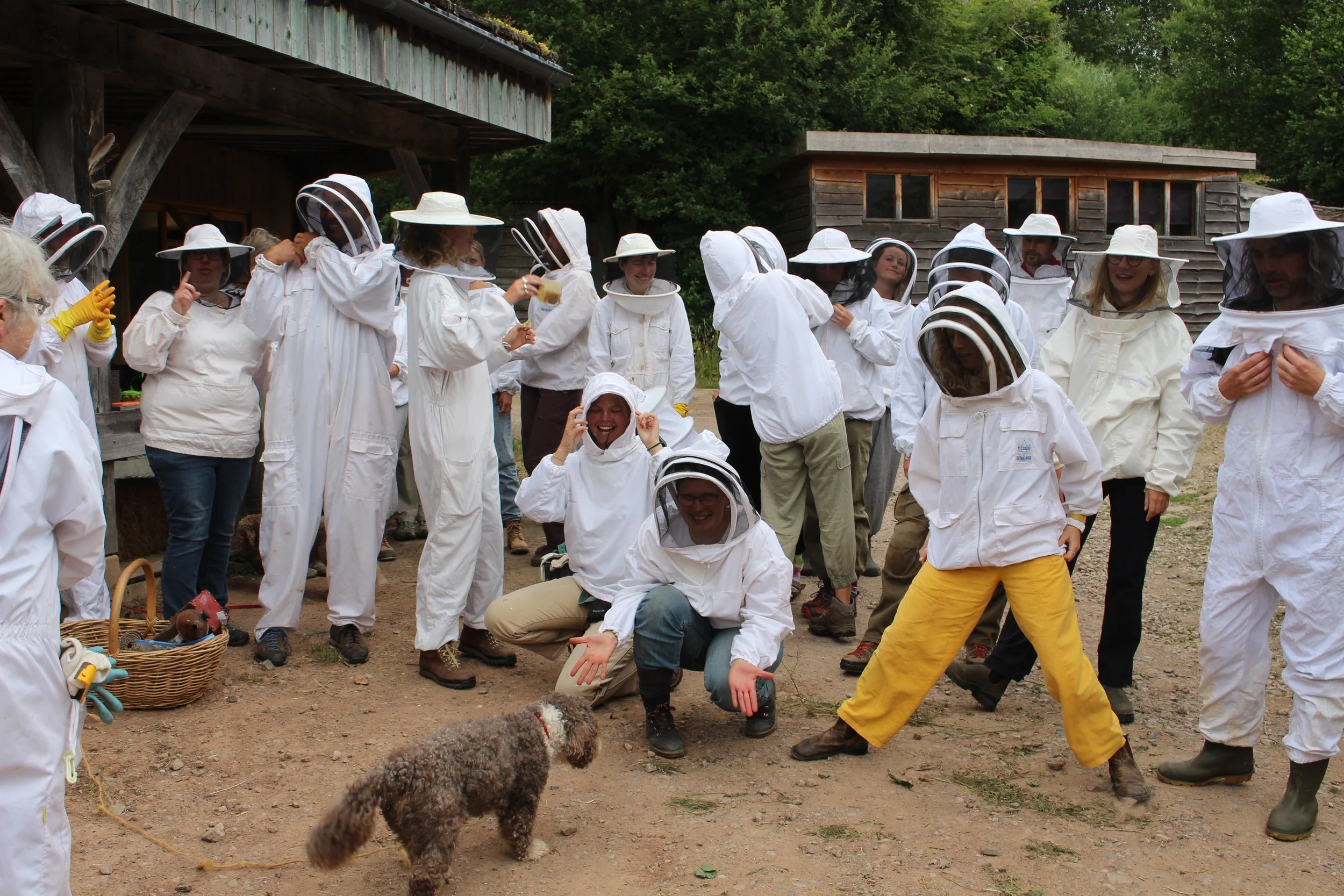
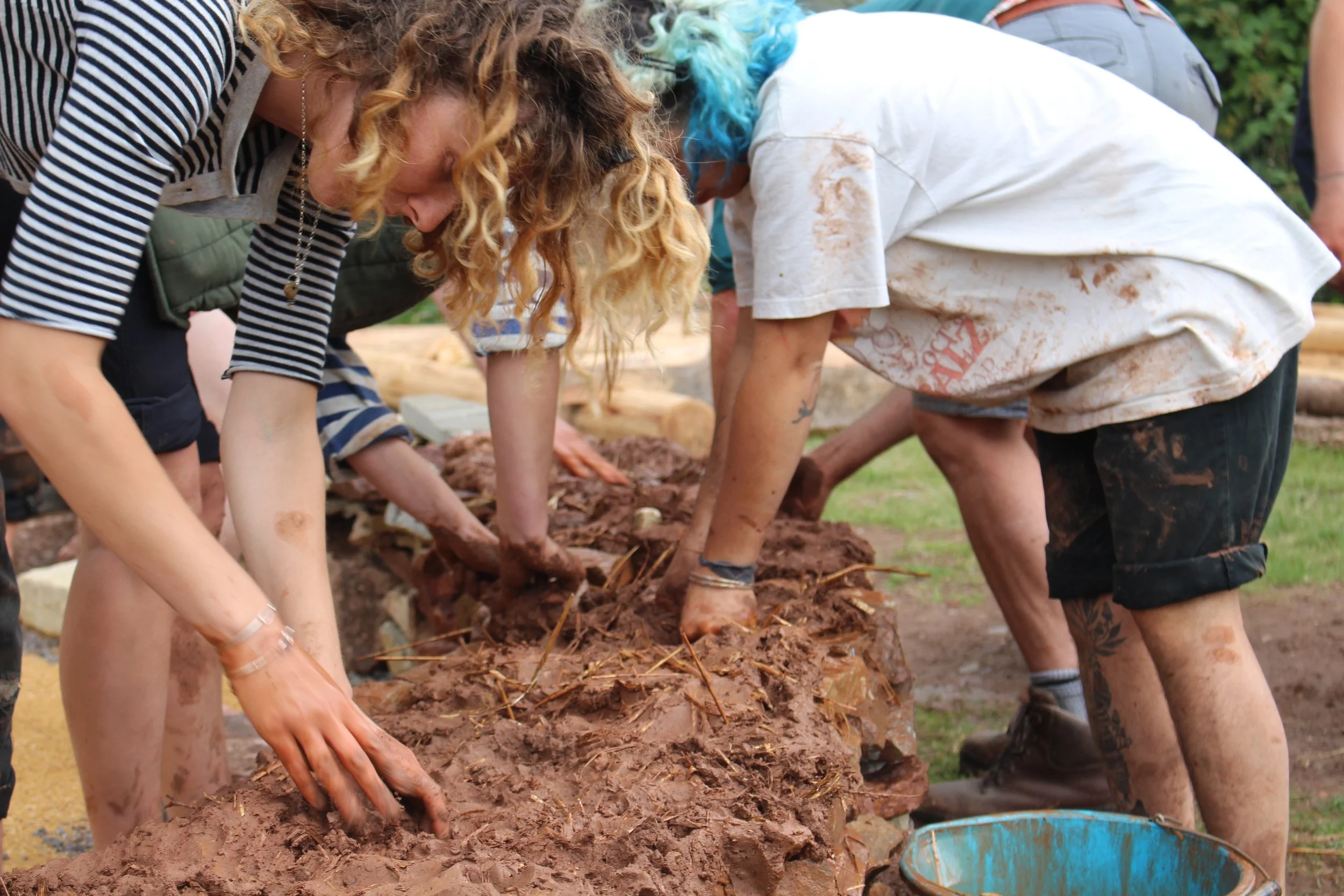
This ambitious course is huge in its range of subjects and experiences, and is ideal for those who are curious and searching for opportunities to try out lots of different skills and roles in the world of Practical Sustainability, and who want to learn about permaculture design can be applied in the wider context of the challenging times we are in. Whether you’ve been disillusioned by mainstream education, you are thinking of a career change into something offering more connection with land or people, or you’re now retired and ready to pass on your experience in a meaningful way, this course provides a fun, engaging playground of discovery and exploration.
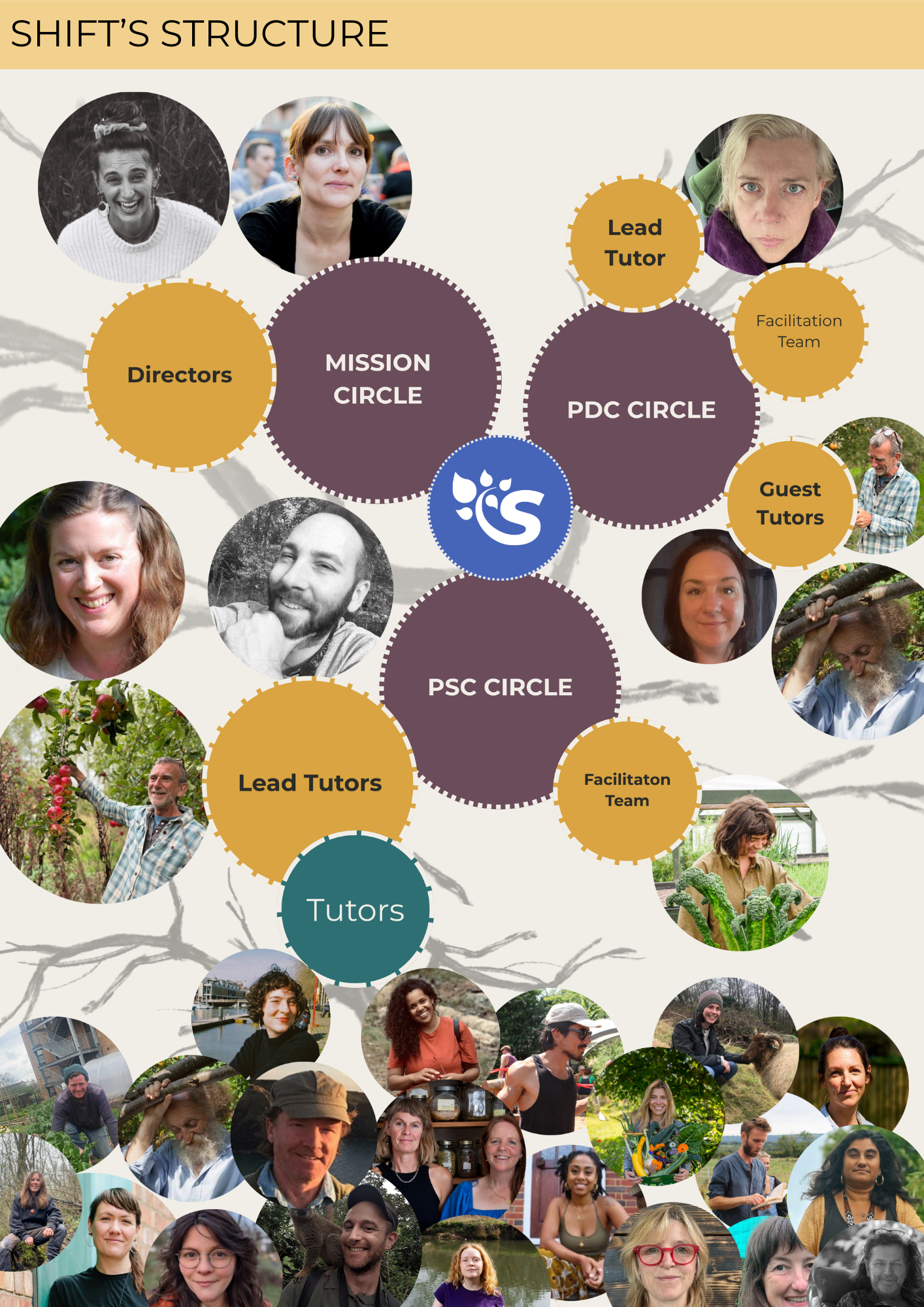
The PSC is delivered by an ever-evolving cracking team of over 45 tutors and practitioners, who bring with them their passion, expertise and pioneering spirit. All tutors are active in their field, so their knowledge and experience is fresh and relevant to our changing world. We only work with tutors who share our Permaculture ethics of earth share, people share and fair share.
All of our teaching is delivered in real time and in-person. This equates to 650+ hours of in-person teaching time.
We visit many tutors and practitioners in their natural environment and this helps to bring their lessons to life in a real world context.
Course Content and Delivery
-
Take a look at the current PSC year’s timetable to give you an idea of the breadth and depth of this course!
We evolve our courses year on year to keep them relevant and dynamic. So although the PSC Timetable for 2026 - 27 won't look exactly the same as this year's one, it will hold a lot of the same content and flow of learning.
-
Fruit and vegetable growing: tree pruning, seed saving, compost creation
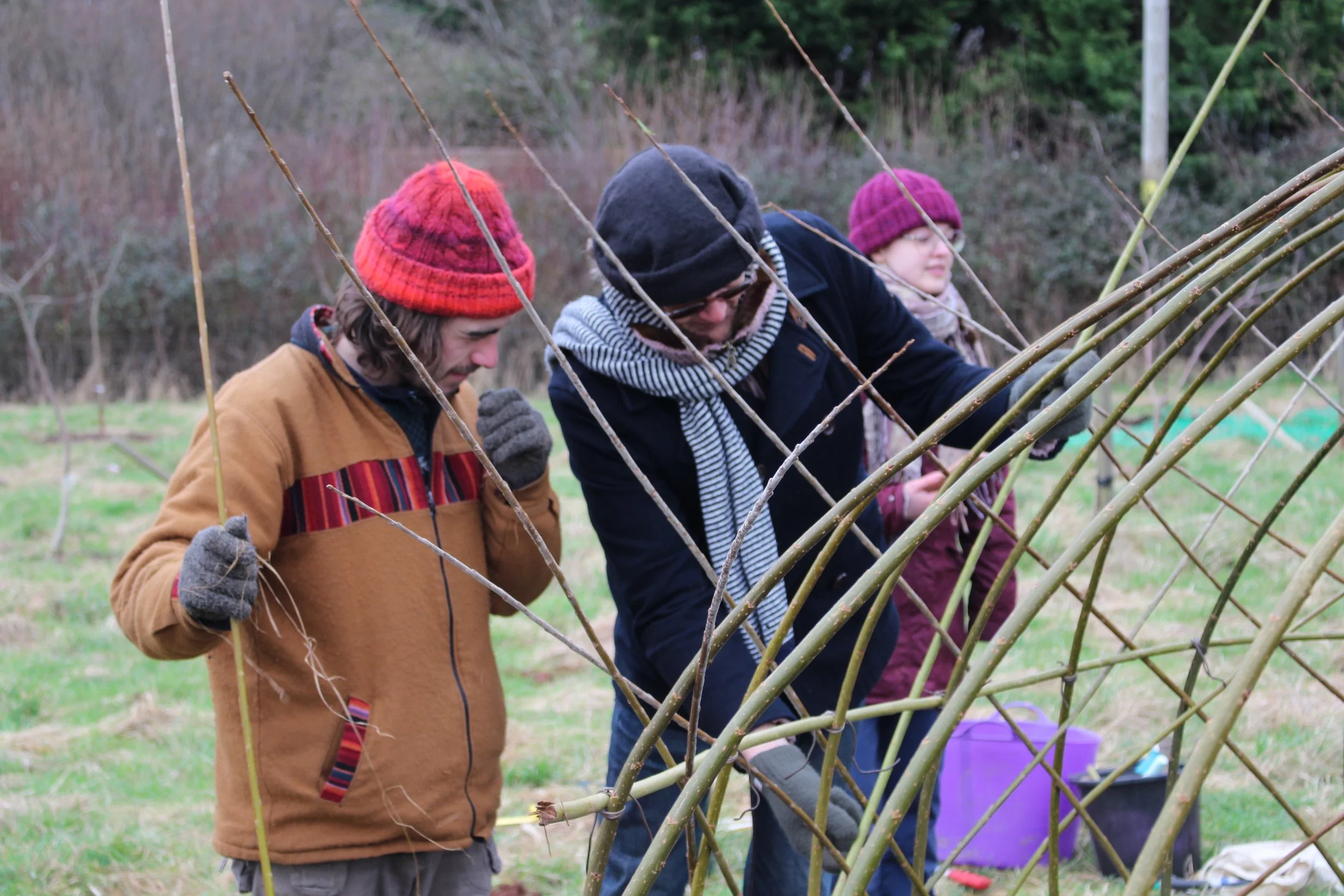
Use of a range of hand tools for roundwood timber framing, greenwood craft, DIY 12V energy systems, woodland management, land restoration
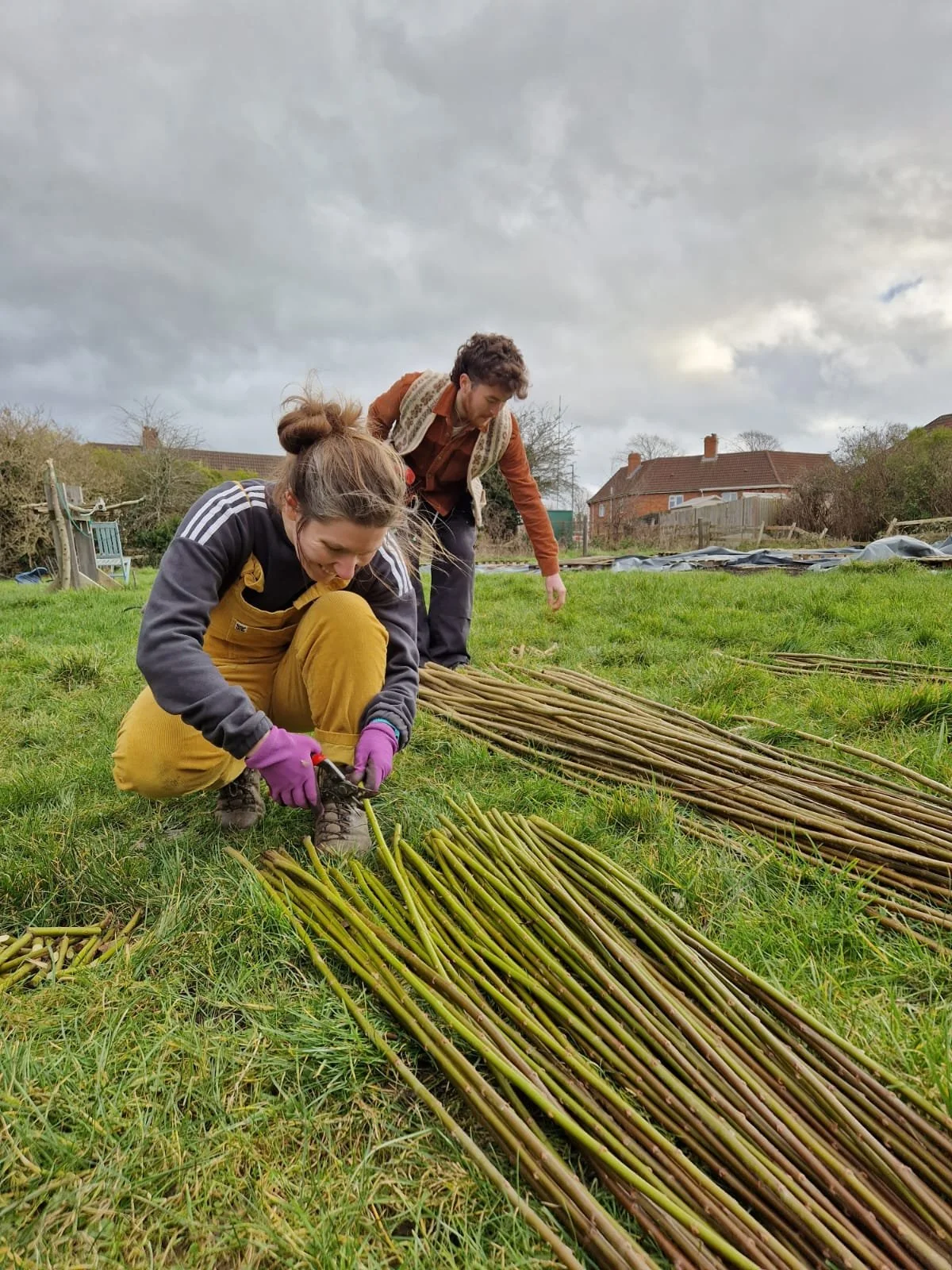
Hand crafts: ceramics, basketry, living willow installation,
Product creation: herbal medicine, ferments, foraged feasts, biofertilisers to name a few.
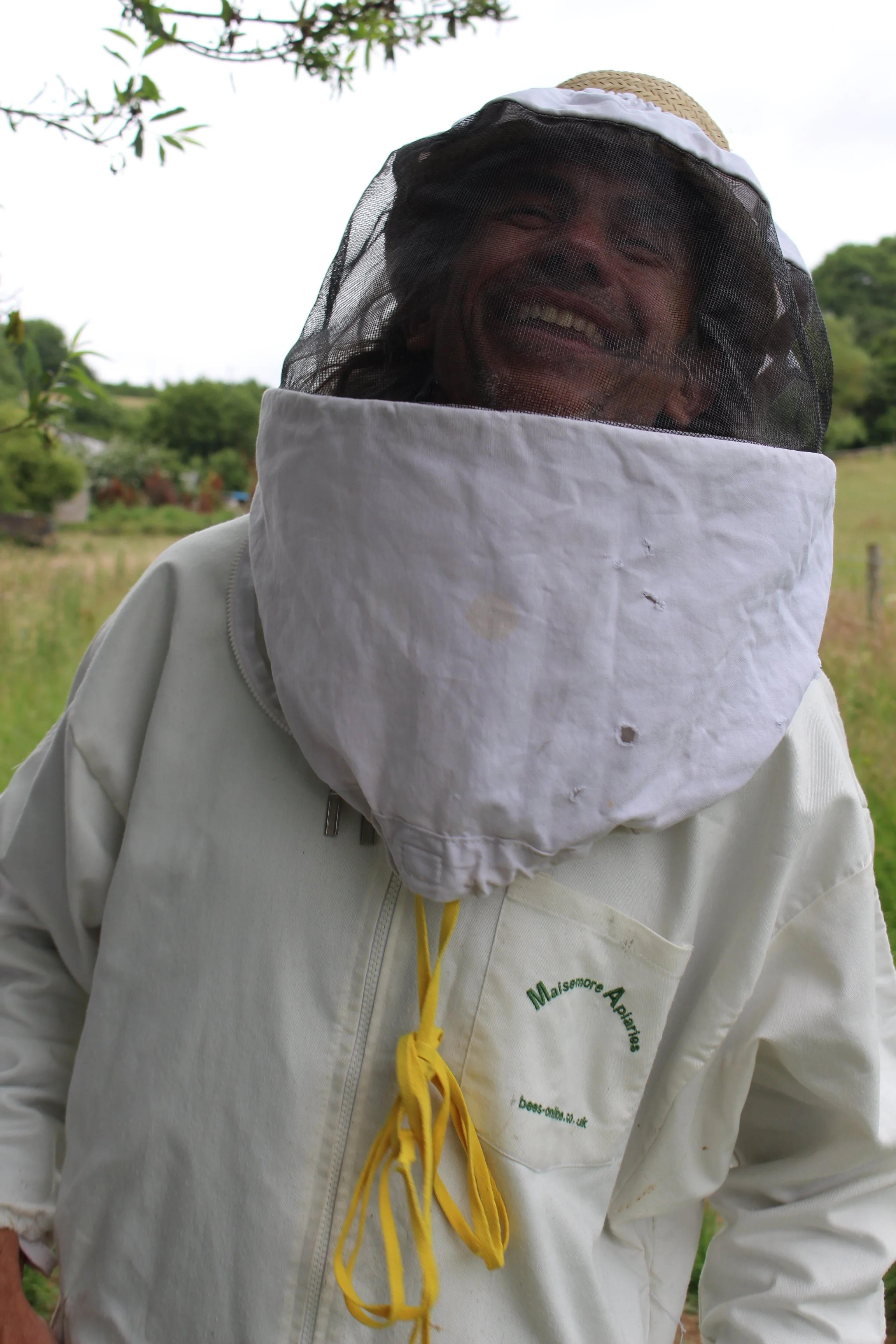
Holistic beekeeping
Forest Garden Design
Permablitzing: using the power of the group to transform community projects in a day
10 Day Roundhouse Build at the end of the Course!
-
Application of Permaculture Principles
Design Frameworks & Tools
Mapping, Surveying & Observation
Soil & ecology sampling
Accessible technology; bunyips & A-frames
Engagement with stakeholders / community
Innovative visioning, problem solving and assimilation of findings
Over the year students work in small groups to produce two Permaculture designs for new or existing community and land projects, in line with their aims.
Growing & abundance
Permaculture design consultancy
-
Global challenges; climate change, resource depletion, societal breakdown, power & geopolitics, the circular economy
Approaches to growing sustainably, for a variety of purposes
Approaches to meeting our housing / shelter / community space needs
Approaches to meeting our energy and comfort needs
Approaches to connecting with the land/nature; from stewardship to livelihood creation
Building and maintaining resilience and wellbeing for ourselves and our communities
Approaches to working with others; from government, stakeholders, marginalised groups to those with opposing viewpoints.
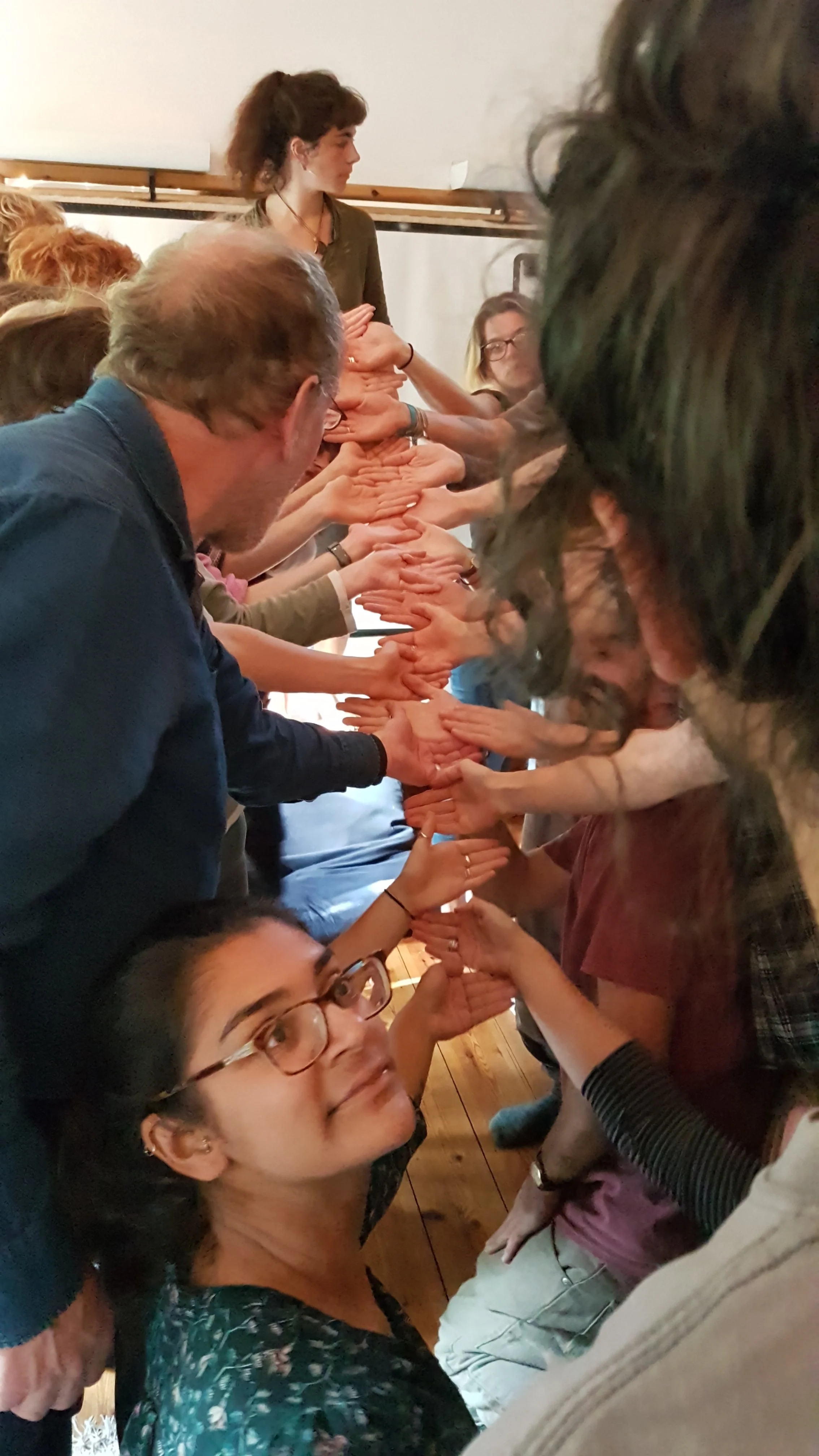
Group development; building a safe container, creating group culture and authentic inclusion.
-
Group development skills; sharing air time, facilitation, exploring power and privilege
Group processes; collective visioning, decision making, conflict resolution, circles and reflection, giving and receiving feedback.
Creating a group container; applying values to action, holding each other accountable
Course Structure & Rhythm
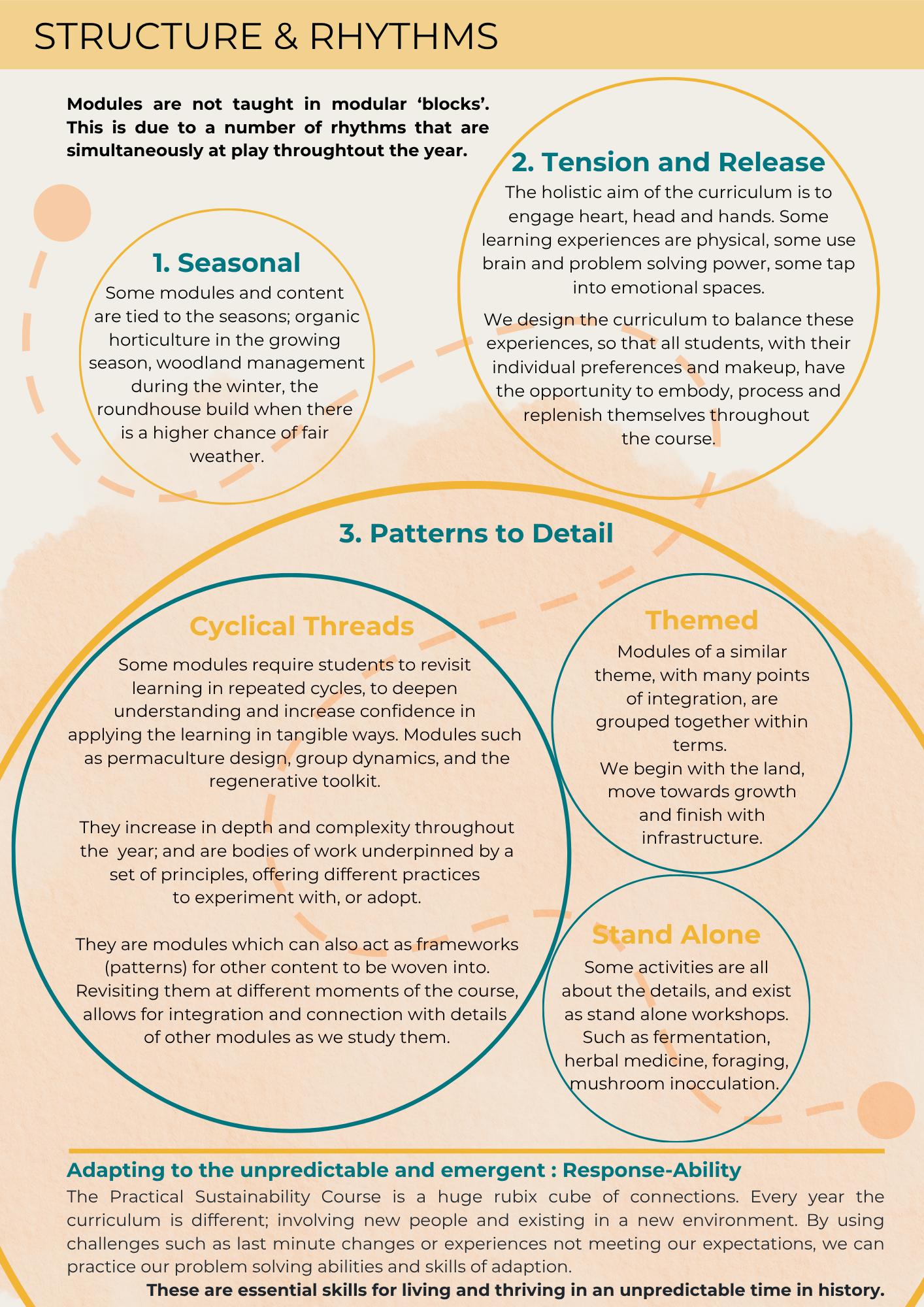
Modules are not taught in blocks, instead we use learning cycles to revisit and develop skills in different ways over the duration of the course; which deepens our understanding and increases confidence
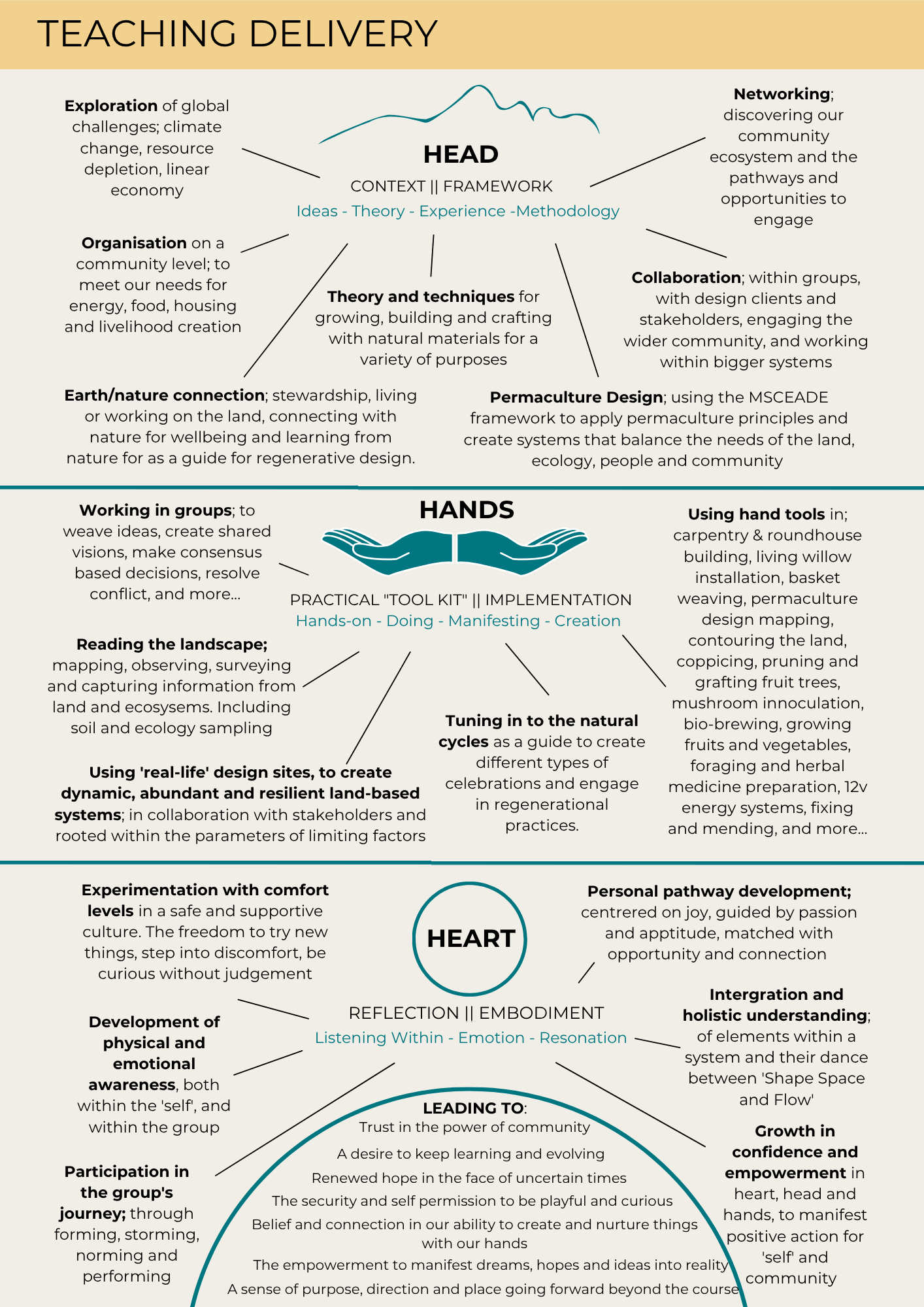
Learning cycle process:
Giving context and knowledge on a subject area
Embodiment of the theory through practical implementation
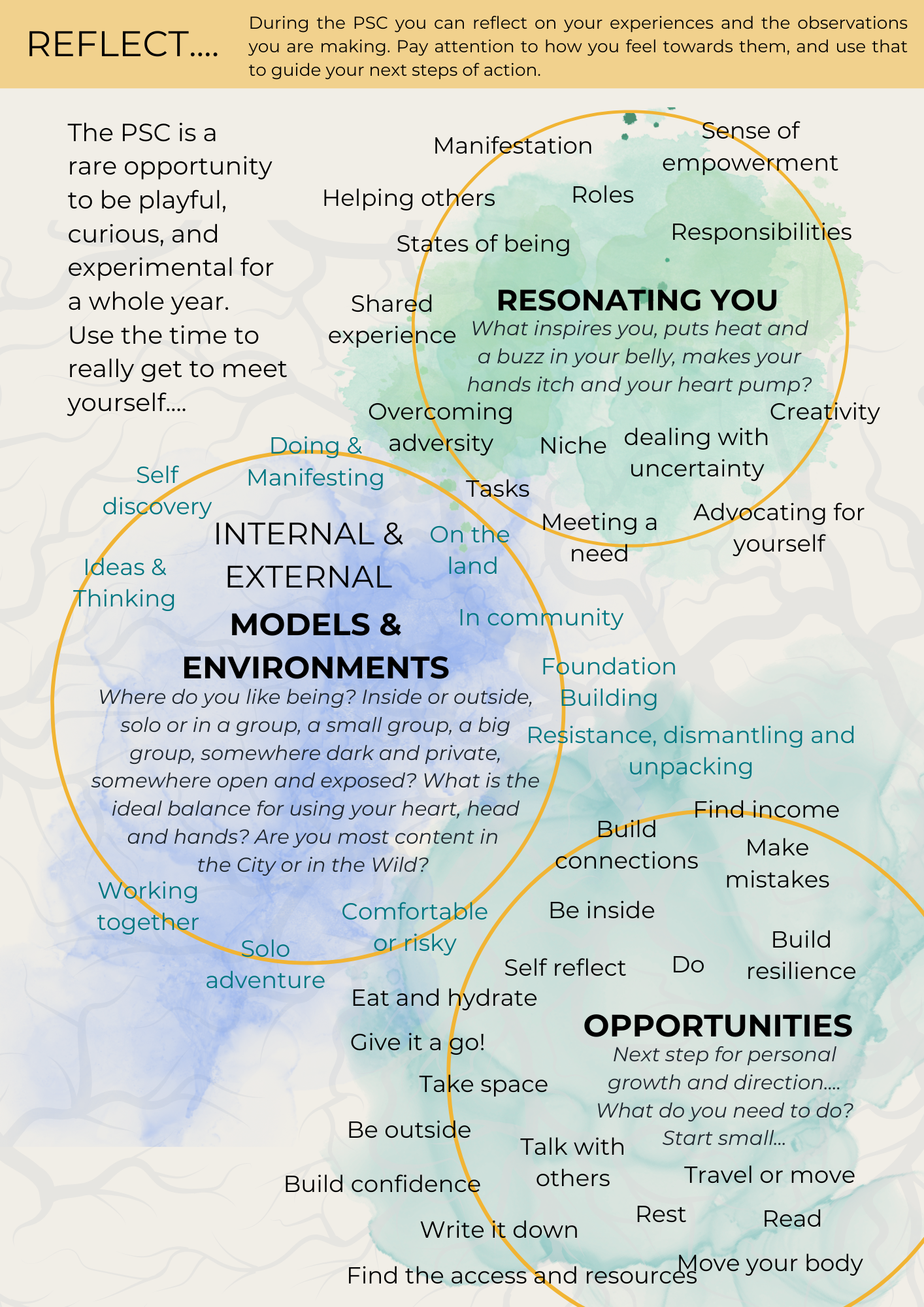
Reflection, in order to assimilate the theory and implementation into holistic understanding; weaving into understanding of self, the wider context of the other subjects and the framework of permaculture system design.